Published: 23 July 2026
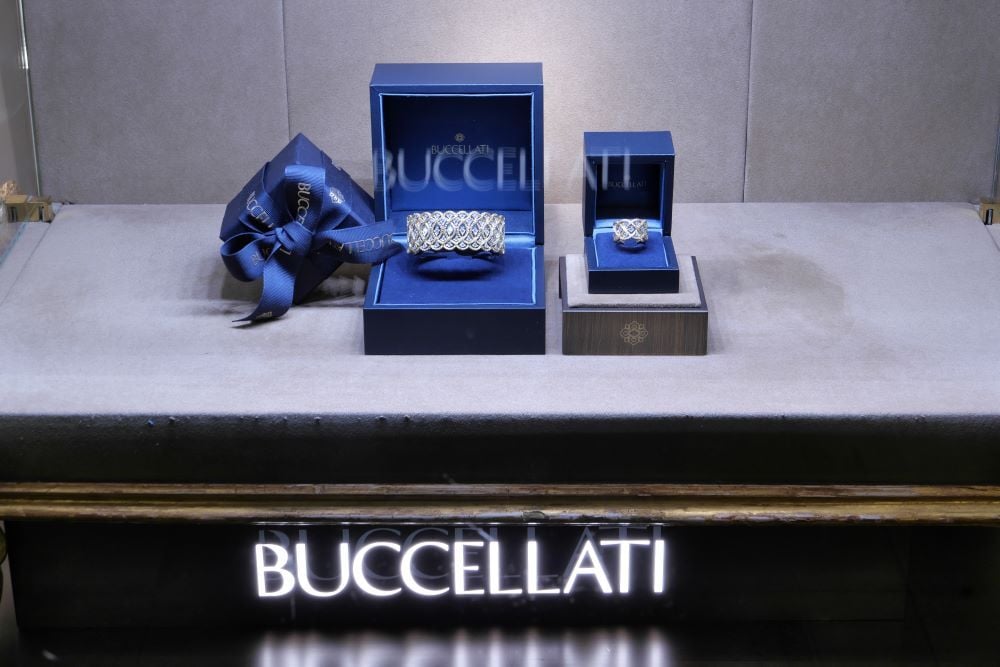
A Buccellati jewel rarely gives everything away at first glance. What appears to be softly brushed gold reveals, on closer inspection, fine lines cut individually and by hand. A broad bracelet has the delicacy of lace; a ring may recall the tracery of a rose window. Diamonds and coloured stones are sometimes used in abundance, but the metal itself remains central to the design.
This treatment of gold has defined the Milanese maison for more than a century. Founded by Mario Buccellati in 1919, the house draws on Renaissance goldsmithing, Venetian textiles, Italian architecture and the natural world. Its jewels are recognisable through their engraving, openwork and subtle use of yellow and white gold, rather than a single recurring emblem. These qualities also shape how Buccellati is regarded at auction. Carat weight is only part of the assessment; workmanship, date, design and condition all matter, as does a piece’s place within the history of the family-founded house.
The House Beyond Milan
In 1919, Mario Buccellati took over Beltrami and Besnati, the goldsmiths with whom he had served his apprenticeship, and opened his first shop at Via Santa Margherita 5, between La Scala and the Galleria. His grounding in historic Italian goldsmithing, together with his interest in Renaissance ornament and antique metalwork, shaped the house from the beginning.
A chance meeting outside the shop in 1922 began Mario’s friendship with the poet Gabriele d’Annunzio. The maison’s archive preserves 83 letters exchanged between them from 1922 to 1936, recording commissions for cigarette cases, engraved boxes and other gifts. In 1936, d’Annunzio called Mario the ‘Prince of Goldsmiths’ – a name that has followed him ever since.
The business crossed the Atlantic in 1951, when Buccellati opened its first New York shop on 51st Street. After Mario’s death in 1965, his sons continued the work, with Gianmaria overseeing design and the workshops while Luca developed the American business. Paris followed in 1979, when Buccellati became the first Italian jewellery house to open a boutique on Place Vendôme.
Richemont acquired Buccellati in 2019, although the family remains closely involved. Andrea Buccellati and his daughter Lucrezia represent the third and fourth generations of its creative history, connecting present-day collections with the drawings, techniques and workshop knowledge developed by their predecessors.
The Goldsmith’s Vocabulary
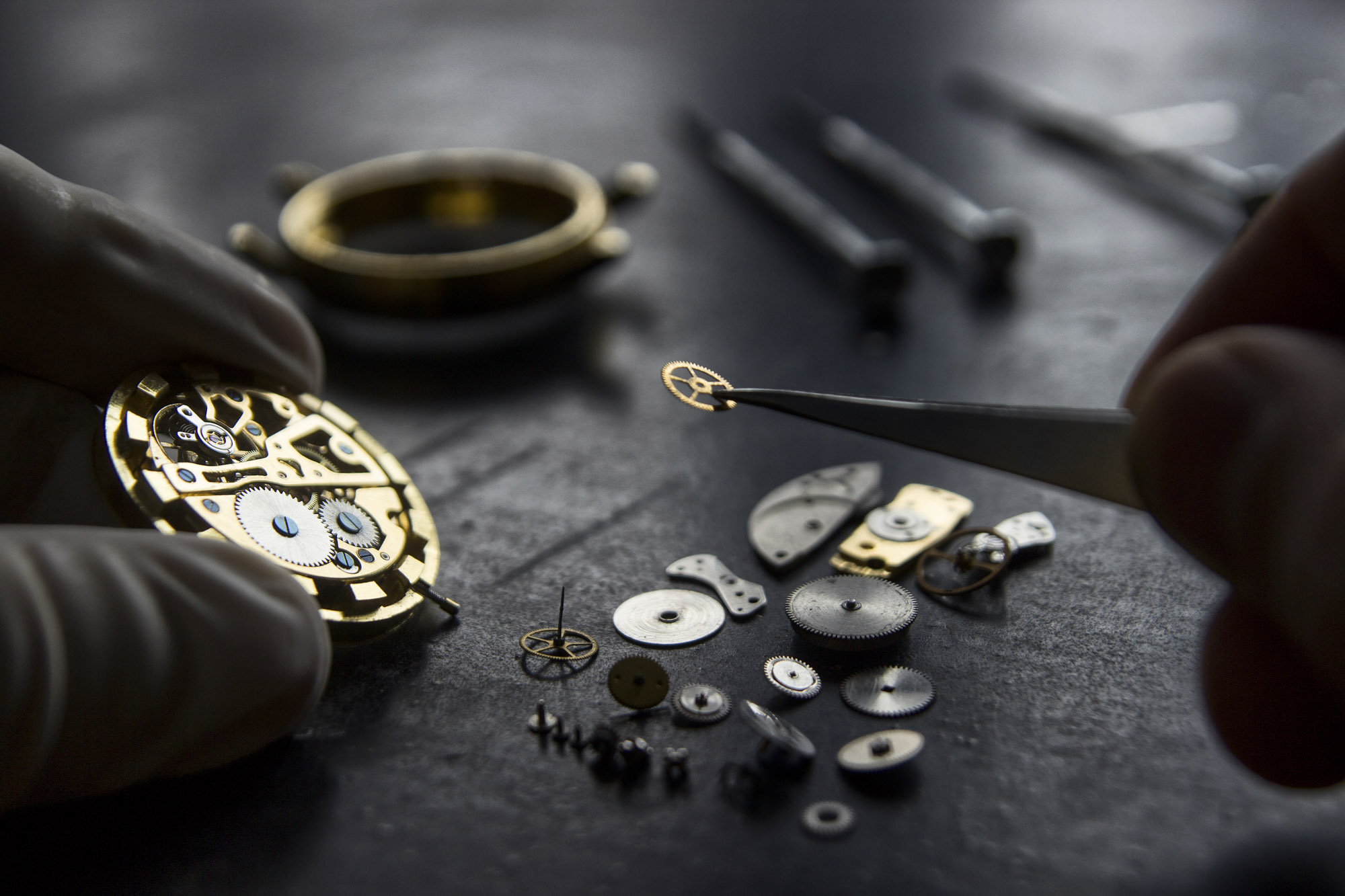
At the workbench, Buccellati’s distinctive finish begins with a rather modest instrument. The burin, a small engraving tool used since the Renaissance, is guided across the gold by hand, one incision following another. Direction and depth matter. Alter either, and the light changes with it.
Perhaps the most recognisable result is rigato. Its fine parallel lines soften the hard reflection of polished gold, leaving a surface with the lustre of silk. The technique is closely associated with the Macri collection, where broad expanses of engraved metal are interrupted by brilliant-cut diamonds in tiny star-shaped rosettes and, on some pieces, polished gold beads. Against the matt ground, these details appear particularly bright.
Change the pattern of the cuts and the character of the metal changes too. In telato, lines cross at right angles, giving gold the grain of linen or an artist’s canvas. Segrinato is denser, built from closely worked marks that overlap in several directions. Buccellati often uses it for leaves, petals and shells, where an evenly polished surface would lose the subtle irregularities found in nature.
Ornato is more elaborate. Floral motifs are engraved over a rigato ground, with the burin moving through patterns drawn from Renaissance brocade, damask and lace. Matt and polished passages sit beside one another, creating depth without relying on larger stones.
Tulle from the Beginning
A finished Tulle jewel can look as though the gold has been woven. The process begins, however, with a solid sheet of metal. Once the design has been traced, the openings are drilled and cut with a fine handsaw to form a mesh of tiny polygonal cells. Each cell must be reworked with the handsaw at least five times before the surface is ready for engraved ornament and gemstones. It is painstaking work, despite the apparent lightness of the result.
Tulle was part of Buccellati’s repertoire from the maison’s earliest years. When Sotheby’s marked Buccellati’s centenary in Paris in 2019, the accompanying non-selling exhibition included two pieces made by Mario during the 1920s. The Mirta Tulle bracelet resembles a narrow ribbon of pierced gold, while the Clotilde tiara uses the same lace-like openwork on a more formal scale, set with natural pearls and diamonds. Neither was an auction lot; both came from the Buccellati family’s private collection.
Seen together, they place the technique within the house’s first decade. Later forms include tulle raggiera, in which elongated openings spread from a central stone like the tracery of a rose window. The pattern changed, but the demanding work of removing the gold cell by cell remained.
Macri and the Modern Cuff
After the pierced intricacy of Tulle, a Macri cuff looks almost spare. Gianmaria Buccellati named the collection for his daughter Maria Cristina, shortening her name to Macri. Across its broad gold surface, fine rigato lines soften the reflection, while brilliant-cut diamonds sit in tiny star-shaped rosettes. Some versions add polished beads against the matt engraving.
With no dominant centre stone, proportion and workmanship carry the design. The cuff has sufficient scale for evening, yet its clean outline also works with daytime tailoring.
Movement enters the picture with Hawaii, created by Mario in the 1930s and later expanded by Andrea. Small circles of hand-twisted gold are linked into supple strands, allowing earrings and long necklaces to shift with the wearer. Where Macri holds light across a broad engraved surface, Hawaii catches it at the edges, in motion.
Gianmaria at Auction
On 29 October 2019, during Buccellati’s centenary year, Sotheby’s Paris offered 26 Buccellati lots, accompanied by a non-selling exhibition of 16 historic pieces. The sale showed how Gianmaria retained Mario’s engraving techniques while introducing stronger colour and more sculptural settings.
One of the most revealing lots was the 1992 Gran Mogol necklace. Seven heart-shaped aquamarines totalling 27.61 carats were framed by textured gold pavé-set with 602 rubies weighing 14.56 carats, and linked by cabochon emeralds. Gianmaria drew on the jewellery of the Mughal courts, bringing its saturated colour into a setting worked with Renaissance-derived patterns. Estimated at €16,000–€24,000, the necklace realised €52,500. The result cannot be read through carat weight alone; design and workmanship are integral to the necklace’s auction value.
The Jacqueline demi-parure, completed in 1988 and 1990, offered another view of his method. Amethysts and citrines sat among grapevine leaves worked in segrinato and rigato, with a pear-shaped citrine of 35.66 carats forming the necklace’s principal drop. A reproduction of the original drawing accompanied the lot – a useful link between the finished jewel and Gianmaria’s design process.
His range extended beyond coloured-stone necklaces. The 1988 Charleston necklace revisited the tasselled seed-pearl styles of the 1920s, while the 1999 Confetto powder box placed diamond-centred ornato stars against a finely cross-hatched telato ground.
What Collectors Should Examine
Buccellati’s hand-worked surfaces make condition particularly important. Engraving should remain crisp, openwork intact and articulated links fluid. Heavy polishing can soften the incised lines, while repairs to a Tulle mesh require close examination.
Date and authorship matter too. A signature is useful but cannot establish attribution by itself, since hallmarks can be copied and collection names are sometimes assigned too readily. Workmanship and marks should be considered together, supported where possible by numbering, original drawings, fitted cases and provenance.
Comparisons should therefore be made between genuinely similar pieces, taking account of maker, period, rarity, scale and condition. The finest Buccellati jewels reward close inspection because the workmanship remains visible in the gold itself – in every engraved line, pierced cell and articulated link.