Published: 3 September 2026
In 1963, Aristotle Onassis acquired the Greek island of Skorpios and began remaking the previously barren island: he planted more than 200 varieties of trees, imported sand and secured water from another island. The project exposed a truth that still governs this private market. Acquiring land is often simpler than making it habitable.
Infrastructure costs make islands difficult to value, while private sales leave no price index. Even so, demand accelerated in 2020 as estates became homes, offices and classrooms. For buyers prepared to foot the bill, the objective was control over access and development within national law.
The Value of a Boundary
On a wholly owned island, seclusion is built into the geography. With no adjoining plot or through-road, arrivals can be arranged in advance. As a result, the household has unusual command of its setting and shoreline.
Yet the waterline is not a legal drawbridge. Title may not extend to the foreshore, seabed or surrounding water, and public-access rights differ between jurisdictions. Planning and environmental rules still apply, as does tax law.
Scarcity, however, does not guarantee that an island will increase in value. With few comparable sales and a narrow buyer pool, islands are harder to value than houses in established prime districts. For that reason, buying an island makes most sense when it is easy to reach, well looked after in the owner’s absence and visited often enough to justify the expense.
Against that background, the three examples below show what the choice looks like in practice. In each case, the buyer must draw the line between independence and convenience and decide how much responsibility to take on.
Whole-Island Ownership at Inchconnachan
Inchconnachan covers more than 100 wooded acres in Loch Lomond & The Trossachs National Park. Its 3,854-metre shoreline looks towards Ben Lomond, while Scots pine, oak and birch grow across the interior. Red-necked wallabies, introduced during the twentieth century, are among its more unusual residents.
United Kingdom Sotheby’s International Realty is currently marketing the freehold island for £2.5 million with planning permission. Its sales particulars also outline a £9.5 million turnkey option, including an estimated £7 million building programme that is expected to take about two years. GRAS Architects’ approved proposals include a two-storey lodge, boathouse, jetties, warden’s accommodation, boardwalks, a plant room and stores. The lodge is designed on screw-piled foundations intended to reduce disturbance to tree roots and the woodland floor.
However, the fine print matters as much as the architecture. Inchconnachan lies within the Inchtavannach and Inchconnachan Site of Special Scientific Interest (SSSI). Part of this protected site also lies within the Loch Lomond Woods Special Area of Conservation. As a result, the proposals extend beyond construction to removing invasive species, allowing the native woodland to regenerate and creating new wet woodland.
Crucially, the consent allows the lodge to be used as short-term holiday accommodation; it is not approval for an unrestricted permanent home. A buyer would therefore need to confirm how this condition applies to private stays. The buildings, habitat work and continuing care of the land must be considered as parts of the same undertaking.
Freehold title does not remove Scotland’s public-access rights. Responsible access generally applies to woodland, beaches and inland water, although houses and private gardens are excluded. The property can therefore offer considerable seclusion without giving its owner an absolute right to close every part of the land or shore.
Even so, some of the groundwork has already been laid. The property has an architectural direction, a mainland jetty and an approved route through planning. If the programme is completed as intended, holiday use would sit alongside the longer-term restoration and management of the woodland.
Managed Island Ownership at Amali
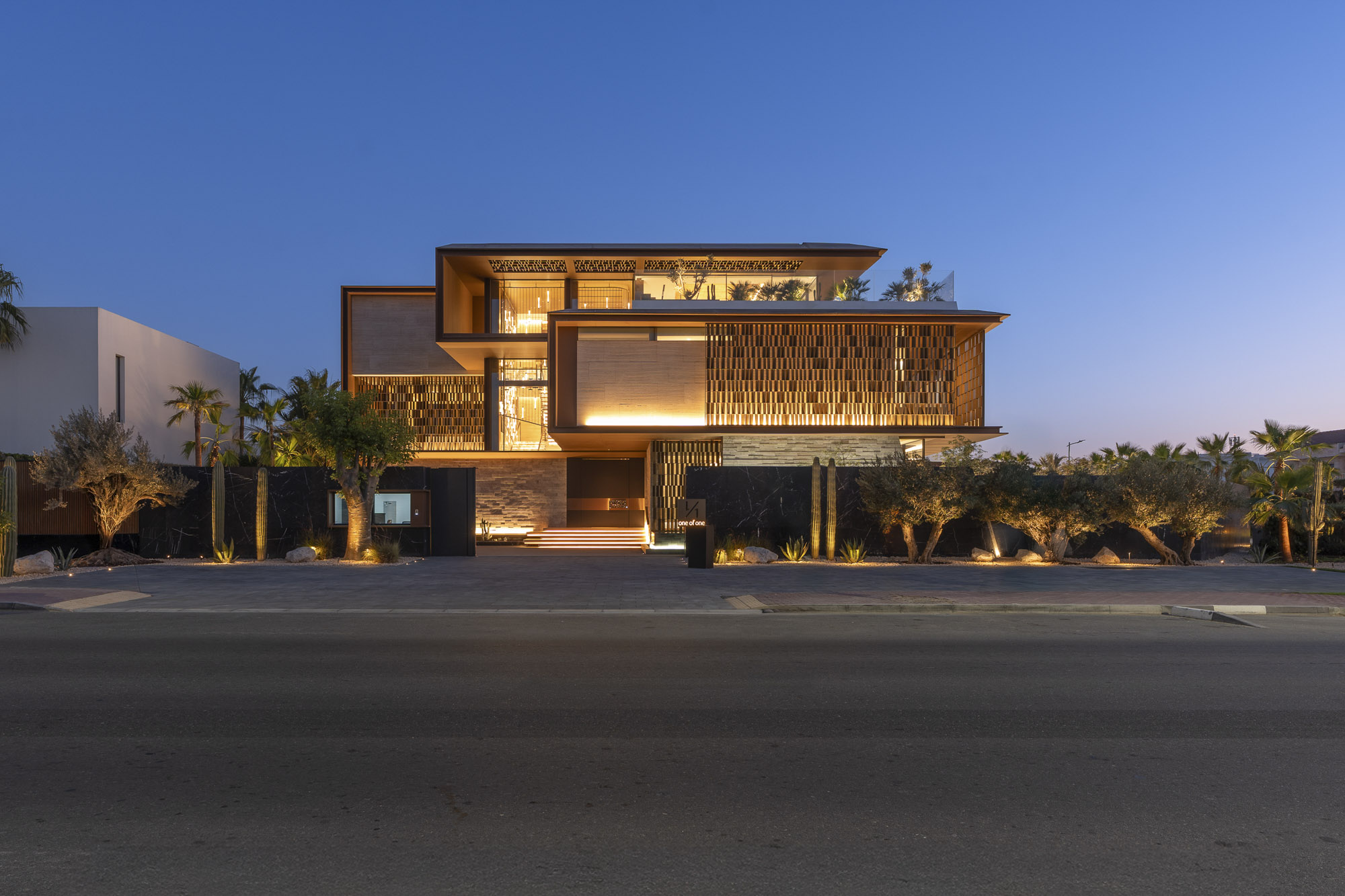
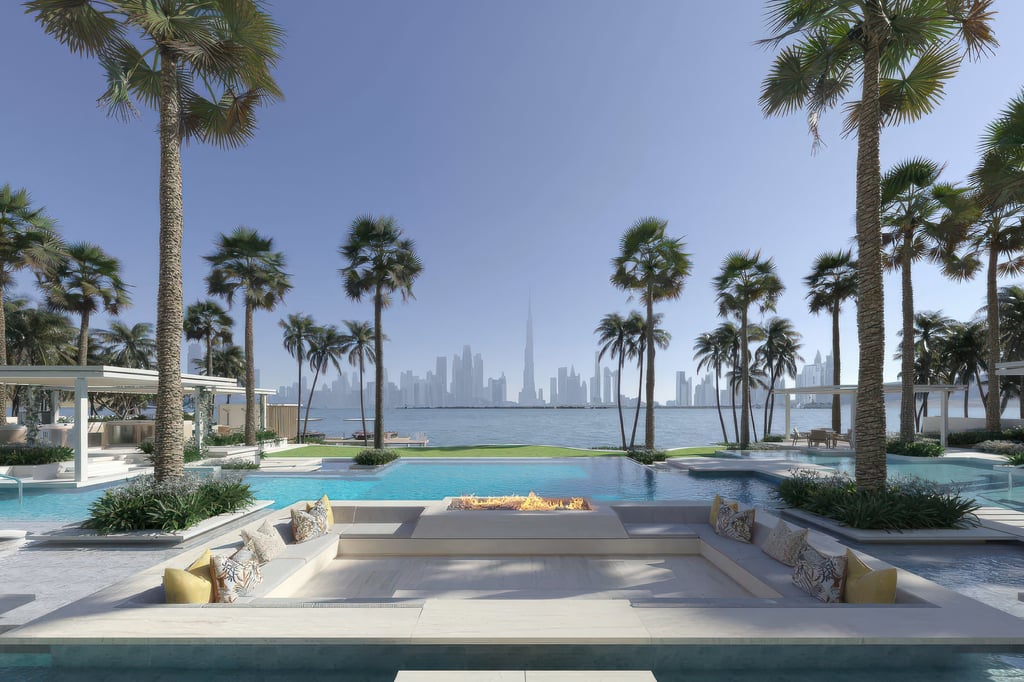
Amali brings together two islands in Dubai’s World Islands, creating a community of 24 beachfront villas rather than a single estate. Each residence has its own plot and berth, while communal facilities are shared. Homes have up to 50 metres of beachfront.
Dubai Sotheby’s International Realty has listed a six-bedroom, seven-bathroom villa on Amali Island for AED 99 million. The residence extends to approximately 16,012 square feet on a 38,860 - square-foot plot and includes a private basement boat dock for direct access by water.
Accordingly, the checks extend beyond the villa. Buyers need to understand the delivery timetable, marine access, service charges and how upkeep is divided between the community manager and each household. Responsibility for berths, beaches, shared utilities and transport should be clear.
The practical gain is that the nuts and bolts of offshore living are handled collectively. Communal services are organised across the development, while Dubai’s offices, schools, hospitals and airport remain within striking distance once ashore.
In return, residents accept shared rules and charges. They own a villa, not the islands themselves. The arrangement offers a middle course between retreat and routine, with more separation than a mainland house but fewer daily responsibilities than an independent island.
A Coastal Estate in Barbados
Barbados offers the third model. It is not an example of private-island ownership; the buyer purchases a coastal estate within an established Caribbean country, gaining access to schools, healthcare, property managers and international flights without having to provide the island’s essential services.
Along Barbados’s West Coast, beachfront villas, golf estates and marina communities offer different balances of privacy, staffing and shared services. The choice ranges from an independently managed coastal estate to a lock-and-leave home that can be maintained while its owner is abroad.
Overseas buyers may purchase property, although exchange-control procedures apply to non-residents. Permission must be obtained from the Central Bank of Barbados and is usually granted when the full purchase price is brought into the country. The funds should also be registered, providing the records required if capital is later repatriated. Local borrowing needs separate approval and is not normally available to finance such purchases.
Against this background, Barbados asks how much separation a buyer genuinely needs. For a family hoping to put down roots in the Caribbean, a West Coast estate can provide privacy and direct access to the sea without requiring the household to supply every service for itself. Owning an entire island makes sense only when sole use of the shore would materially change family life.
Infrastructure Before Architecture
With an island, the first serious checks concern what lies beyond the camera’s frame. Lawyers must confirm title, boundaries, tenure, public-access rights and the legal position of the foreshore, seabed and marine approach. Marine surveyors and engineers must then assess berth depth, tides, prevailing winds and the condition of jetties or sea defences. Together with planning and environmental rules, these factors determine when—and how easily—the property can be reached.
Past weather is no longer enough to describe a changing coast. Forward-looking assessments should cover flooding, erosion, storm surge and sea-level rise where relevant. Those findings must then be considered alongside insurance availability, exclusions, premiums and responsibility for coastal protection. On reclaimed or low-lying ground, the remaining design life of seawalls, jetties and revetments can matter as much as the condition of the house.
The same order applies to everyday operation. Freshwater, reserve power, sewage, waste, communications, fuel storage and fire protection should be planned before the number of bedrooms. Construction costs also rise when every worker, machine and building material must arrive by boat.
Nor does spending end at completion. A life-cycle budget should cover the inspection, servicing and eventual replacement of jetties, pontoons, boats, water-treatment equipment, generators, batteries and communications systems. Salt-laden air, wind and moving water shorten maintenance cycles. Staff transport and emergency cover may continue during empty months, making an adequate reserve essential. Deferring marine repairs can quickly become a false economy.
The acid test is how well the island can be reached, insured and run over several decades. When access, power and coastal protection are properly planned, ownership becomes more predictable and the property is better placed to serve the family across seasons and generations.