November, 2026
Two Centuries of European and British Art Come to Sotheby's London This December
From the sunlit domes and carved facades of colonial-era India to the saturated nightlife of Belle Époque Pari...
Explore more
Latest stories
November, 2026
From the sunlit domes and carved facades of colonial-era India to the saturated nightlife of Belle Époque Pari...
Explore moreNovember, 2026
November, 2026
Each December, Abu Dhabi’s calendar fills with events that draw international attention to the capital. This y...
Explore morePublished: 25 February 2026
Buying off-plan property in Dubai is often described as securing tomorrow’s address on today’s terms. It is the promise of a waterfront skyline view, a landmark-branded residence, or a carefully positioned investment acquired long before the keys exist. Yet, at its best, it is not a leap of faith. Dubai’s off-plan market operates within a framework shaped by escrow protection, interim registration and active regulatory oversight, allowing buyers to understand precisely what is being purchased, who is authorised to sell it and how funds are handled throughout construction.
In recent market cycles, off-plan transactions have remained a defining force across Dubai’s property landscape, with research suggesting shares approaching the 70% mark in several quarters. As new launches continue to emerge across both established districts and emerging waterfront communities, understanding the process has become less optional and more essential for both investors and end users.
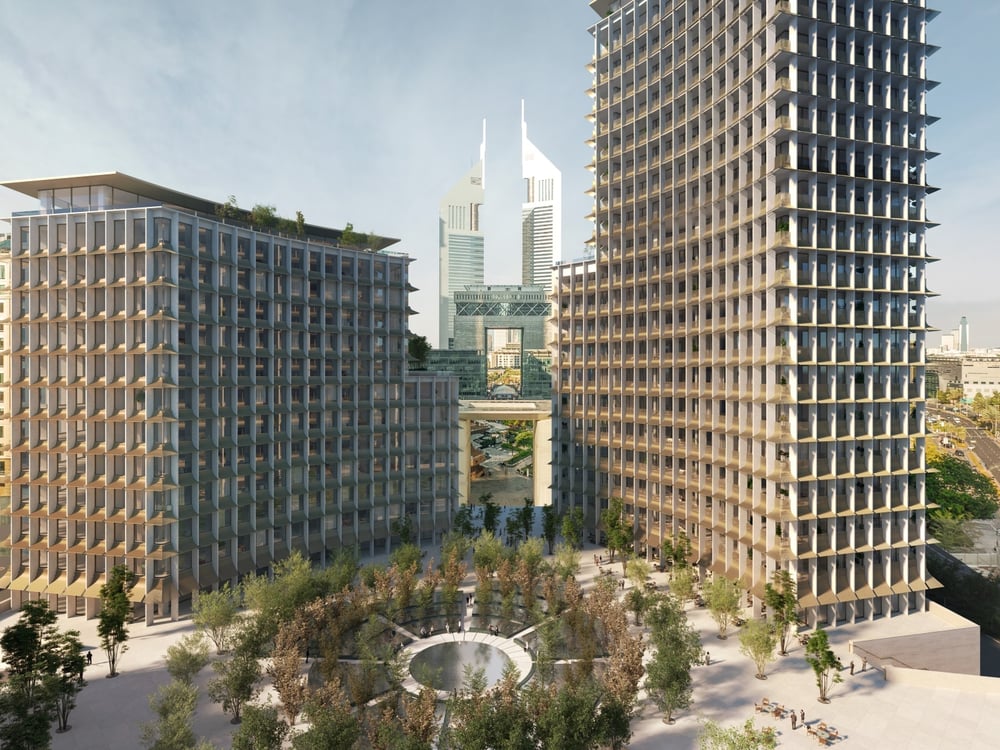
Before exploring each stage in detail, the process typically follows a clear sequence:
Quite simply, each step exists to ensure transparency between reservation and final ownership.
Within Dubai’s legal framework, an off-plan sale refers to designated real property units sold before completion and final registration on the main Property Register. Buyers commit to a residence that exists on approved plans and construction milestones rather than in finished form.
The ownership journey unfolds in two stages. During construction, the buyer’s interest is recorded on the Interim Property Register, while after completion the project transitions to the final Property Register where ownership is reflected through a Certificate of Title.
For experienced buyers, interim registration is not merely procedural. In practice, it forms the legal foundation that protects ownership rights during construction and ensures that the transaction sits within Dubai’s regulated framework from the outset.
Several forces continue to shape demand across Dubai’s off-plan market.
First, launch pricing and phased payment structures often create a more flexible entry point than comparable ready stock. Instalments aligned with construction milestones allow capital to remain strategically allocated rather than fully committed at once. Naturally, this phased approach appeals to investors seeking both access and flexibility.
Second, early buyers frequently benefit from wider choice. Premium stacks, higher floors and architectural vantage points tend to be secured at launch, while similar positions may become scarce once projects move into the resale cycle.
Third, the scale of Dubai’s off-plan ecosystem supports both liquidity and confidence. Strong transaction volumes and sustained end-user demand help reinforce long-term value positioning rather than leaving resale potential as an afterthought.
Dubai’s safeguards are best understood through two interconnected systems: escrow discipline and interim registration.
Escrow discipline ensures that buyer payments flow into a project-specific account dedicated exclusively to construction. Each development maintains its own escrow structure, reinforcing financial oversight and preventing funds from being redirected elsewhere. Platforms such as Dubai REST provide buyers with access to completion percentages, project imagery and escrow details, offering an additional layer of regulatory insight throughout construction.
Interim registration, meanwhile, protects legal ownership. By recording the buyer’s interest before completion, the framework establishes enforceable rights well before handover. Developers must secure land ownership and regulatory approvals before selling off-plan, and contracts for unapproved projects are considered invalid. Oversight by the Real Estate Regulatory Agency further strengthens the process by monitoring construction progress and intervening when projects fail to meet requirements.
Before signing a Sales and Purchase Agreement, due diligence should begin with verification rather than marketing material. Buyers are encouraged to confirm through Dubai Land Department or RERA channels that the project is registered, that an escrow account exists and that the developer is authorised to sell units within that development.
Key checks often include:
Of course, while these checks may appear procedural, they establish the legal and financial foundation of the purchase long before any reservation fee is paid.
Once a project has been verified, buyers typically proceed with reserving a unit and assembling the contractual file. Transactions are structured through a Sales and Purchase Agreement supported by identity documentation, including Emirates ID for residents or passport copies for overseas purchasers.
At this stage, the purchase moves from aspiration to commitment. Although administrative in nature, it is where pricing terms, payment schedules and developer obligations become formally documented, setting the tone for the remainder of the process.
Payment discipline remains one of the defining strengths of Dubai’s off-plan framework. Funds should move only through the approved escrow account designated for the project. Purchaser payments are deposited into a project-specific account tied directly to construction progress.
From a buyer’s perspective, the principle is straightforward:
These safeguards reinforce clarity around where funds are held and how they are released.
Off-plan payment plans are commonly structured around construction progress. Buyers have the right to understand the project’s current completion percentage before releasing instalments. Approved consultant reports and regulatory platforms provide structured oversight, ensuring payment requests correspond with verified milestones.
Dubai REST offers real-time progress tracking, allowing buyers to review updates beyond developer communications. In many cases, this visibility helps ensure that payments remain aligned with tangible development stages rather than projected timelines alone.
Some buyers consider resale or assignment prior to handover. Dubai’s interim registration framework recognises that off-plan units recorded within the register may be transferred, mortgaged or otherwise disposed of where contractual conditions permit.
However, assignment policies vary between developers and projects. Using registered brokers and authorised channels remains essential, particularly in a market where early-stage opportunities can attract aggressive promotion.
As construction concludes, ownership moves from interim registration to final title. Once completion certificates are issued, developers enter the project into the Property Register and units are transferred into purchasers’ names where contractual obligations have been met.
Operationally, the issuance of the e-Certificate of Title, commonly known as the title deed, signals the transition from construction-stage ownership to fully registered real property.
While pricing structures vary between projects, buyers should typically anticipate the following:
|
Cost Item |
What It Covers |
Typical Note |
|---|---|---|
|
DLD Registration Fee |
Property registration |
Often 4% unless waived by developer |
|
Oqood / Interim Registration |
Provisional ownership recording |
Administrative developer fee |
|
Title Deed Issuance |
Final ownership registration |
Payable at handover |
|
Service Charges |
Building/community upkeep |
Applies after completion |
As a general indication, Dubai Land Department registration is typically calculated at around 4% of the property value, although many off-plan launches include promotional waivers or shared fee structures. For context, a residence priced at AED 3,000,000 could carry a registration cost of approximately AED 120,000 before incentives, alongside administrative and title issuance charges that vary between projects.
Before committing, buyers may wish to confirm:
Quite naturally, these checkpoints transform a complex transaction into a structured and transparent process.
At the centre of every well-executed off-plan purchase lies a sense of certainty. Approvals are transparent, escrow structures are defined and interim registration anchors ownership from the earliest stages of construction. Dubai’s framework is designed to reward that discipline, combining financial safeguards with legal oversight to create a more transparent investment environment than many global markets.
With informed due diligence, structured payment discipline and a clear understanding of the legal process, buyers can approach off-plan opportunities with confidence, securing a future residence while remaining anchored to a framework built on oversight, accountability and long-term value.