Published: 1 June 2026
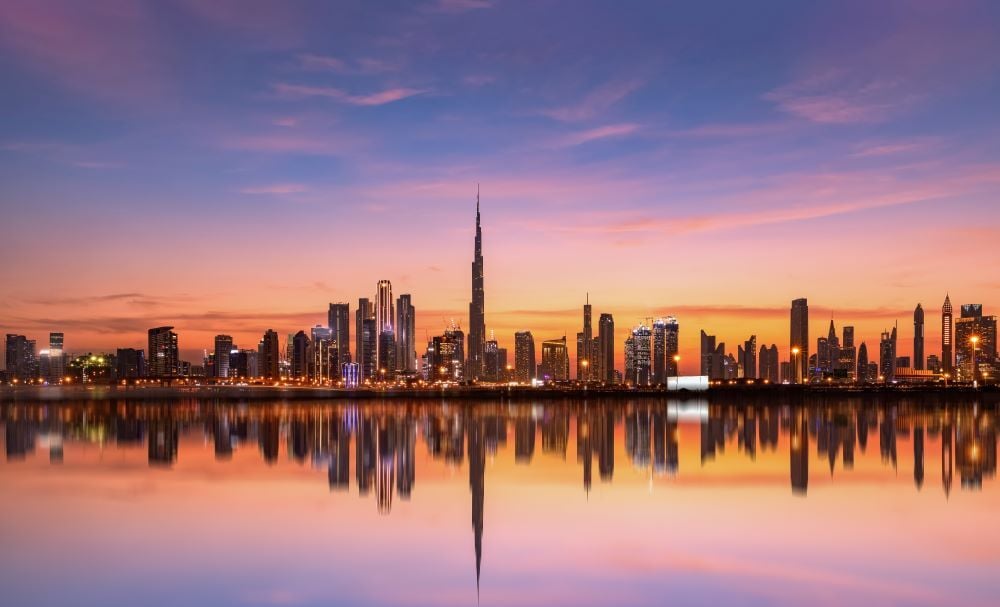
Dubai has never been short of visible ambition. Yet while its skyline remains the clearest expression of that ambition, the more consequential story now lies in the systems being built beneath it. Transport networks, digital services, industrial platforms, clean-energy projects, urban planning strategies and business reforms are, together, setting the terms for the city’s next decade, on a scale that points to a more coordinated phase of growth.
Dubai Vision 2030 sits, in many ways, at the heart of this shift. Rather than a single programme, it is a framework for making growth more deliberate, connecting the city’s economic, environmental and social priorities into a clearer direction of travel.
A Vision Built On Economic Depth
Dubai’s economic planning has, by design, moved beyond reliance on any single sector. Real estate, tourism and trade remain part and parcel of the city’s growth story, but they now sit alongside finance, technology, logistics, advanced manufacturing, digital services and clean energy as more deliberate pillars of expansion.
Dubai’s strength has often come from its ability to adapt as demand changes, moving from trading port to aviation hub, and from regional business centre to a more diversified economy shaped by property, tourism, finance and entrepreneurship. The focus now is on putting that momentum on firmer footing, with a broader economy less exposed to one cycle or one source of growth.
Much of the work now lies in execution: attracting talent, supporting high-growth companies, expanding trade links and making it easier for businesses to enter, operate and scale. In that sense, Dubai Vision 2030 gives economic diversification a clearer frame, with growth spread across more sectors and supported by stronger infrastructure.
Digital Government As Everyday Infrastructure
Digital government has, in daily terms, become part of the city’s machinery. Paperless transactions, unified platforms, digital identity and mobile-first services have made many routine processes faster, quieter and less dependent on the traditional counter.
For residents, this means fewer visits, fewer forms and more services completed in minutes. For businesses, it means quicker licensing, smoother approvals and a more predictable operating environment. For the city itself, it creates cleaner data, more efficient administration and a stronger base for artificial intelligence.
This is where policy becomes practical. Digital transformation is not useful because it sounds modern. It is useful because it changes the ordinary experience of living, working and investing in Dubai.
Mobility Designed For The Next Urban Era
Mobility in Dubai is, increasingly, about more than getting from one district to another. It is about how the city manages growth, connects emerging neighbourhoods and eases the pressure that comes with scale.
The Dubai Metro already gives the city a strong base in automated public transport. The next phase is more layered, with autonomous mobility, self-driving taxis, smarter public transport, AI-supported traffic management and more efficient logistics all becoming part of the wider picture.
The value lies in use. Better mobility makes the city easier to navigate. It shortens journeys, links new districts more effectively, supports business movement and gives residential communities beyond the traditional centre a stronger place in the city’s daily rhythm.
As Dubai grows, transport will remain one of the clearest tests of its planning. A city can expand on paper, but it only works in practice when people, goods and services can move through it with ease.
The Rise Of The 20-Minute City
The 20-minute city brings a quieter kind of planning into focus within Dubai’s wider urban agenda. Rather than asking residents to cross the city for daily essentials, it places schools, parks, retail, transport links and community facilities closer to home.
For Dubai, this marks a useful change in emphasis. The city has often been shaped by movement across distance, but proximity is now becoming part of the value equation. A well-planned neighbourhood is no longer judged by housing alone, but by what sits within easy reach: shade, walkability, public transport, green space and the small conveniences that make daily life work.
For real estate, the influence is already visible in communities that reduce long commutes and support a fuller routine close to home. These neighbourhoods are likely to hold greater appeal as buyers place more value on proximity, convenience and everyday ease. In that sense, urban planning becomes part of long-term value, not simply a matter of layout.
Sustainability As A Strategic Priority
For Dubai, sustainability is, by necessity, an operational question. A city built in the desert has to think carefully about energy, water, cooling, landscaping and resource management, not as abstract environmental themes, but as part of the cost and logic of growth.
The Mohammed Bin Rashid Al Maktoum Solar Park gives that shift its clearest physical form. Planned to reach 5,000 MW by 2030, it moves the discussion from principle to infrastructure, placing clean energy within the machinery of the city rather than at the edge of it.
For developers and investors, the point is increasingly tied to performance. Buildings that use less energy, manage cooling more efficiently and sit within better-planned communities are likely to carry stronger long-term appeal. Sustainability is, in practical terms, becoming part of how buildings are valued, operated and held over time.
Industrial Growth And Advanced Manufacturing
Dubai’s industrial strategy gives the city’s future a more productive base. Advanced manufacturing sits, increasingly, alongside real estate, tourism, trade and finance, with priority sectors spanning aerospace, maritime industries, pharmaceuticals, medical equipment, aluminium, fabricated metals and fast-moving consumer goods.
That is what helps to build a mature economy that relies on more than services and property. It needs specialist production, stronger supply chains and the ability to support industries with long-term practical value. For Dubai, that industrial layer adds substance to its wider growth story.
It also sits naturally with the city’s logistics strength. Ports, airports, free zones and trade infrastructure give Dubai the ability to move goods across regions with relative ease. Advanced manufacturing and logistics, working hand in glove, give the city a stronger platform for regional and international trade.
Real Estate In The Vision Economy
Real estate remains one of the clearest ways Dubai’s ambitions become visible. New communities, mixed-use districts, branded residences, logistics zones, innovation clusters and lifestyle-led master plans all reflect the city’s confidence in long-term growth.
Within this vision, the strongest real estate is likely to be the kind that carries a clear role in daily life. Homes near transport links, communities with schools, parks and retail, offices designed for changing work patterns, industrial assets connected to trade corridors and buildings with lower running costs all sit more naturally within the city’s next phase.
The market is becoming more discerning. Design still matters, but access, liveability, operating efficiency and daily usefulness are now part of the same conversation. In that sense, real estate becomes one of the clearest places where Dubai’s planning choices are felt on the ground.
Innovation And Investment Discipline
Dubai’s approach to innovation is, in practical terms, about application rather than novelty. Artificial intelligence, blockchain, digital identity, autonomous transport and smart services are already being drawn into government, business and daily life, giving the city a working testbed for ideas that elsewhere may remain largely theoretical.
For investors, this matters because innovation is becoming part of the wider value picture, particularly where it supports sectors with a clear role in Dubai’s long-term planning.
Technology, manufacturing, healthcare, sustainability, tourism and financial services are all likely to remain important areas of attention. So too are locations shaped by transport access, logistics corridors, digital business districts, industrial zones and lifestyle-led urban centres.
The point, as ever, is selectivity. Dubai’s expansion will not lift every asset equally. The more durable investments will be those supported by real demand, strong infrastructure and a clear place within the city’s next phase.