Published: 12 October 2026
Beneath the yellow-gold dial of an F.P. Journe Tourbillon Souverain numbered 13/20 lies a movement of rhodium-plated brass. It is the humblest material in the watch, and it goes furthest in explaining why the watch, 38mm across and cased in platinum, sold at Sotheby's Hong Kong for HK$15.9 million in October 2021.
Brass was what François-Paul Journe could afford at the time. No. 13 was one of twenty tourbillons promised to his earliest clients, men and women who paid before he had the means to make the watches. It remains the highest price Sotheby's has achieved for the maker.
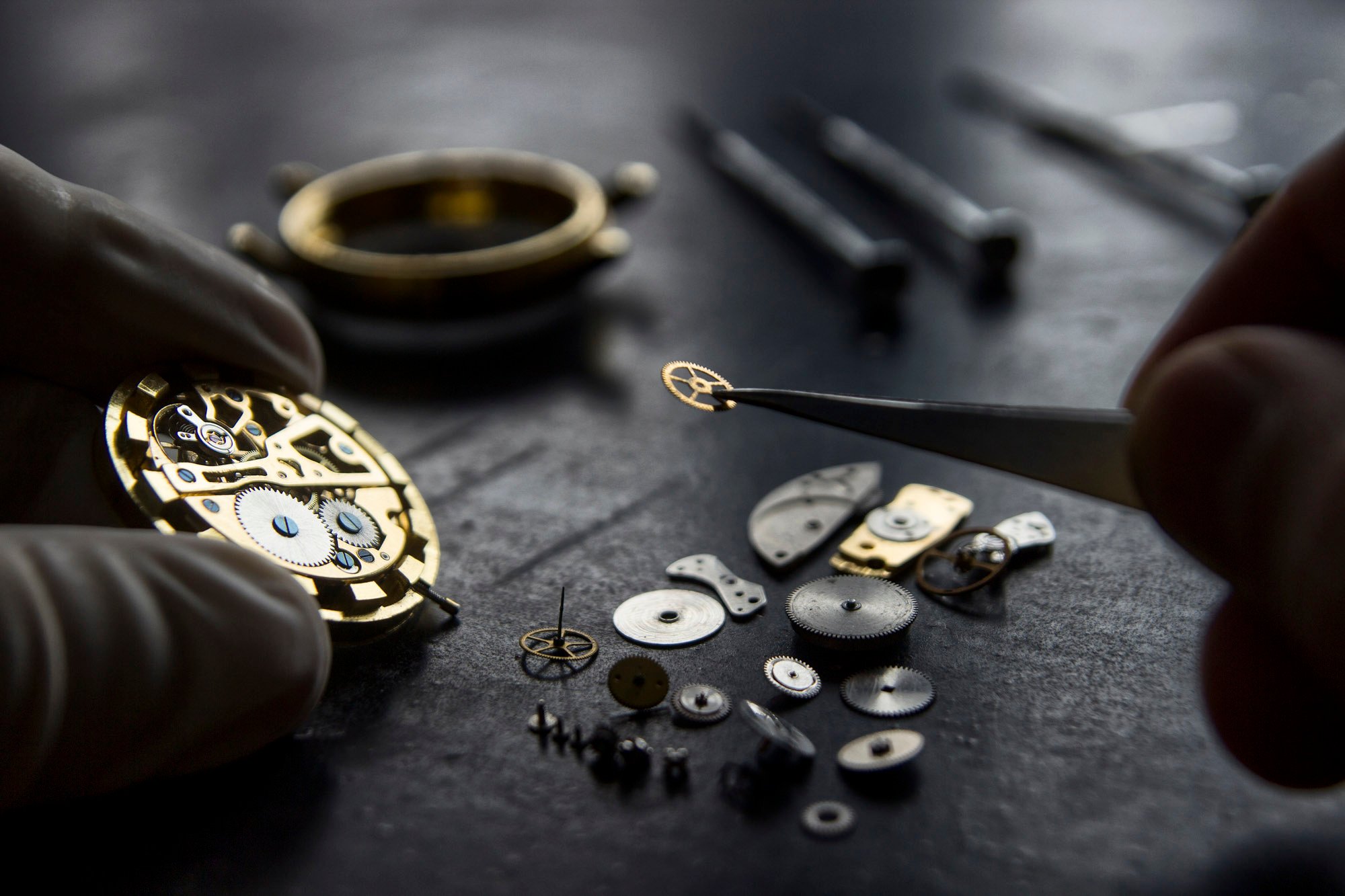
Scarcity is the usual explanation for Journe's prices, and it is not wrong. It does, however, leave out the more interesting part of the story. That part is about trust: who backed a watchmaker who had yet to build a name, and how plainly their faith can still be read in the watches themselves.
An Apprenticeship Among Old Clocks
Journe was born in Marseille in 1957, and school did not suit him. At fourteen he was sent to Paris to stay with his uncle, Michel, who restored antique clocks. The arrangement worked. He took his diploma from the École d'Horlogerie de Paris in 1976, then spent eight years at his uncle's bench, learning the history of the craft and meeting serious collectors along the way.
Restoration shaped everything that followed. Sotheby's traces his interest in resonance to a repair on a Breguet, No. 3177. The tourbillon came by another route. In 1978, he set out to make a tourbillon pocket watch of his own, prompted, by one account, by a George Daniels pocket watch he had seen on one of his uncle's clients. He could not afford to buy such a watch, so he built one. The work took five years, he made every part down to the gold and silver case, and he has kept the watch ever since.
Commissions followed, among them a planetarium mechanism for Asprey of London. By 1985 he had his own workshop on the rue de Verneuil, and for the next decade and more he built complex mechanisms for established houses, which signed the dials with their own names.
Twenty Clients and a Promise
In 1991 Journe made the prototype of what became the Tourbillon Souverain. It was the first wristwatch to carry a remontoire, a device he had worked out in 1982 that feeds the escapement a steady measure of energy.
Money was the obstacle, and Breguet supplied the answer. Under the subscription, a small circle of clients paid in advance for a watch that did not yet exist. Twenty Tourbillon Souverains were set aside for them, each numbered at one o'clock, and Sotheby's records that subscribers were given half off the eventual retail price. At Basel in 1999, asked why he had stopped working for other brands, Journe said he was tired of giving "caviar to swine". The line has followed him ever since.
The Résonance went next to the same twenty, most of whom accepted. There was a twist, though. Their watches were sold first but not made first. Around fifty others left the workshop ahead of them, and the numbered twenty were not finished until late in 2000.
The case numbers preserve that sequence. Early casebacks read XX/YY, the second figure recording the year the case was ordered rather than the year the watch was finished. So the Résonance marked 28/99R, sold by Sotheby's in Geneva in November 2022 for CHF 1.1 million, was in fact the eighth to leave the manufacture. Its number is shallow and engraved by hand, whereas the subscription pieces carry a deeper laser engraving. Serious Journe collecting turns on details of this kind.
Brass, Then Gold
Until 2004 Journe's movements were made of brass. It was cheaper, and for a new business that mattered. That year he moved to 18-carat rose gold, a change the manufacturer presents as a first in modern mechanical watchmaking.
The gold marked his arrival. Collectors, however, save their keenest interest for the years before it, when production was small and largely artisanal and a buyer was backing a watchmaker rather than a name.
Resonance in Plain Terms
If the Tourbillon Souverain introduced Journe to collectors, the Résonance is the watch they now most associate with him. The principle is old. Set two balance wheels close enough together and they begin to influence one another, settling into a shared rhythm in which each helps to steady the other.
Eighteenth-century clockmakers explored the idea, and Journe later bought a resonance regulator made by Antide Janvier around 1780. He was the first to bring the effect into a wristwatch. In the early calibre 1499, two independent gear trains run side by side, with one crown to set the time and a second to bring the two seconds hands into line.
What the Saleroom Rewards
The brass years set the pace at Sotheby's New York in December 2025. A Ruthenium Tourbillon Souverain, numbered 20/99 and made in the limited series of 2001 to 2003, sold for $1.14 million. Its brass calibre 1498 sits beneath a solid gold dial coated in dark grey ruthenium.
Later watches can still reach the same level when their numbers are small enough. At the same sale, a Centigraphe Souverain from the "Rosso Corsa" series, believed to number fewer than twenty pieces, made $1.6 million. Its gold calibre 1506 times intervals to a hundredth of a second. Since 2021, Sotheby's has sold nearly $35 million worth of Journe watches.
The Restorer as Bidder
In November 2025 Journe came to auction as a buyer. At Sotheby's Geneva, in a sale marking Breguet's 250th anniversary, he paid CHF 1.88 million for Breguet No. 1890, a pocket watch with a four-minute tourbillon. It had belonged to the English collector Cecil Clutton and been repaired by George Daniels, and Journe knew both men.
He began by repairing watches of this kind in a Paris workshop. Now he bids for them against the collectors who buy his own.
Collecting Journe Now
The manufacture remains small. It made fewer than 1,000 watches in 2024, its twenty-fifth year, and sells through its own boutiques and a handful of partners. The first in the Gulf opened at Dubai Mall in October 2019, with Ahmed Seddiqi & Sons. London followed in December 2023, at 33 Bruton Street in Mayfair, in rooms once occupied by the gunmaker Holland & Holland.
Sotheby's, for its part, has begun bringing Journe to Gulf salerooms. Its online Abu Dhabi Collectors' Edit: Materiality sale, which closed on 10 July 2026, included a limited-edition platinum Octa Zodiaque from around 2004. It, too, runs on brass. In Europe, the next live Important Watches sale takes place in Geneva on 8 November, and London's timed Fine Watches sale follows from 4 to 10 December.
For a buyer, price is the least helpful guide. Case number, engraving and movement say far more about where a watch sits in the story, and it is the brass years that repay the closest reading.
In 1999, twenty people paid for watches that did not yet exist. What they put down is small beside the sums now heard in Hong Kong, New York and Geneva. Yet their watches still carry the date of that decision, in their case numbers and in the metal of their movements.