Published: 9 September 2026
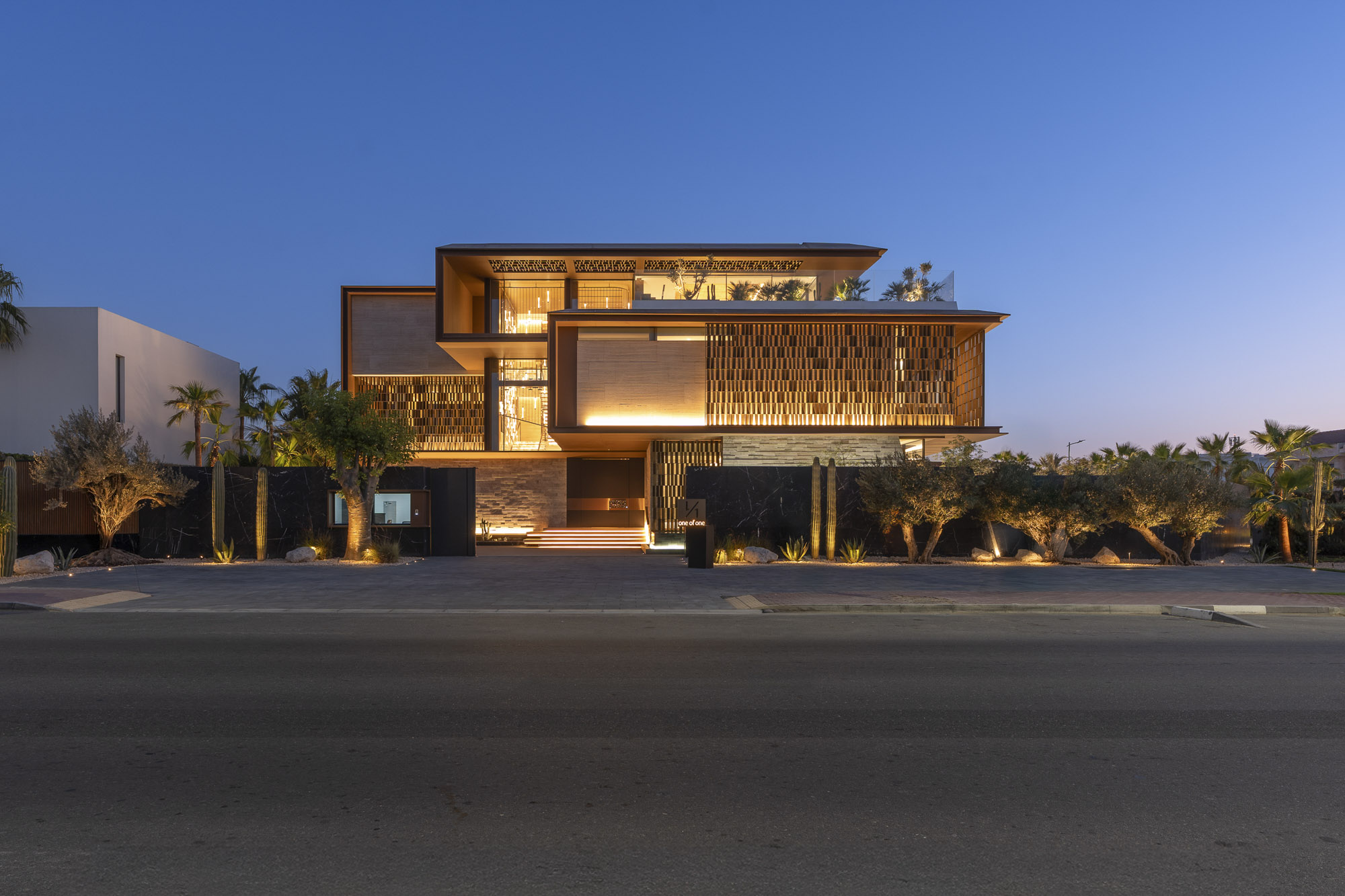
In the second quarter of 2026, Villa Gaia on Jumeirah Bay Island changed hands for AED 280 million. The six-bedroom house has 21,884 square feet of interior space, a nine-car garage and self-contained staff quarters, while its chef’s kitchen and separate back-of-house kitchen can support entertaining for up to 50 guests. Dubai Sotheby’s International Realty said the property was acquired as a long-term family estate rather than a speculative hold or short-cycle investment.
The sale is one example of a pattern already established at the upper end of Dubai’s residential market. Buyers are choosing between neighbourhoods according to how they expect to use a home over time. Jumeirah Bay Island offers limited beachfront land and considerable separation between neighbouring properties. Elsewhere, a larger plot close to schools and everyday services may matter more, while owners who divide their year between several countries may place greater weight on professional management, security and convenient access to the city’s business districts.
That breadth of choice sits within a market of considerable scale. Dubai Land Department recorded AED 252 billion of real-estate transactions in the first quarter of 2026, 31 per cent more by value than a year earlier. Real-estate investment reached AED 173 billion, of which AED 87.71 billion was classified as luxury investment, while foreign investment amounted to AED 148.35 billion. At the highest price points, however, aggregate figures tell only part of the story. The locations buyers choose, and the properties they acquire within them, show the different ways in which substantial private capital is being used.
.jpeg?width=2400&height=1600&name=owqr483kd.jpg%20(1).jpeg)
Jumeirah Bay Island: Scarcity and Long-Term Ownership
Jumeirah Bay Island presents the clearest example of supply being fixed from the outset. The island has only 128 villa plots. As a result, buyers cannot treat one waterfront house as readily interchangeable with another; position, plot dimensions, architecture and the condition of the finished property all influence the comparison.
Recent transactions show the range involved. In March 2025, Dubai Sotheby's International Realty International Realty completed an AED330 million sale for a custom-built villa occupying one of only three plots at the tip of the island. The property became the most expensive home sold on Jumeirah Bay Island at the time.
At the time of writing, the firm is also marketing a six-bedroom waterfront villa for AED255 million. It provides 14,977 square feet of built-up space on a 17,462-square-foot plot. A five-bedroom Bulgari Ocean Mansions residence, meanwhile, is listed at AED195 million and extends to 19,100 square feet.
The distinction between the two ownership models is material. A stand-alone house gives its owner control over the garden, pool and operation of the household. A branded residence introduces shared services and managed facilities. Consequently, the relevant premium depends partly on holding period, the services the owner expects to use and the difficulty of replacing the underlying property.
Palm Jumeirah: Several Markets Behind One Address
If Jumeirah Bay is defined partly by the small number of available plots, Palm Jumeirah works differently. Its fronds, apartment buildings and managed residences create several property markets within the same island. Signature Villas and Garden Homes provide beachfront houses, while apartments and penthouses offer varying degrees of building management and shared services.
The secondary market demonstrates the importance of distinguishing between them. In 2025, Dubai Sotheby's International Realty International Realty sold a Signature Villa for AED161 million, equivalent to AED14,679 per square foot. The firm also handled the AED365 million sale of a 90,000-square-foot undeveloped plot on the island. One transaction concerned finished architecture; the other concerned the ability to create it.
Current listings make the contrast more immediate. A six-bedroom Garden Home on Frond B is offered at AED60 million and extends to 7,352 square feet. At One at Palm Jumeirah, a four-bedroom penthouse of 9,222 square feet is listed at AED88 million. The latter includes two kitchens, double-height living space, a large terrace and private pool, while the building provides concierge, security, spa and fitness facilities.
For an owner who spends considerable time abroad, that operating structure can be as relevant as floor area. It also introduces a different cost base. Dubai Sotheby's International Realty International Realty’s valuation guidance cites branded-residence premiums reaching up to 42 per cent over unbranded counterparts. Such a premium should not be confused with guaranteed appreciation. Service charges, management standards, contractual arrangements and eventual resale conditions remain part of the calculation.
Emirates Hills: When the Plot Is Part of the Asset
Emirates Hills shifts the emphasis back towards land. The gated community contains about 600 homes and was established as a freehold area where owners could acquire land and build to their own requirements. Its houses consequently differ markedly in architecture, scale and age.
Those differences help explain why price per square foot can be an imperfect measure here. In the closing weeks of 2025, Dubai Sotheby's International Realty International Realty completed the AED233.5 million sale of a fully renovated six-bedroom mansion. At roughly AED8,000 per square foot, it established a new price-per-square-foot benchmark for a villa in Emirates Hills. Across the year, the community recorded AED2.9 billion in sales, a 20.8 per cent increase in transaction value despite 17.6 per cent fewer properties changing hands. The rise, therefore, came from larger values rather than greater transaction volume.
The current portfolio illustrates the point. One exclusive nine-bedroom mansion is offered on a price-on-request basis, with 32,500 square feet of built-up space on a 37,600-square-foot plot. Alongside its family and reception rooms are staff kitchens, landscaped grounds and a nine-car garage.
For a prospective buyer, the due-diligence exercise extends well beyond finishes. Plot position, golf-course outlook, the existing structure and the scope and cost of refurbishment can materially affect the total capital committed. An apparently lower acquisition price becomes less meaningful if several years of design and construction follow.
Dubai Hills Estate: Capital Allocated to the Family Home
Dubai Hills Estate introduces another set of considerations. Rather than relying principally on waterfront scarcity or the individuality of older plots, its upper end combines large contemporary houses with a planned residential community containing schools, parks, retail and an 18-hole golf course.
Dubai Hills Estate has been established at the upper end of Dubai’s residential market for several years. In November 2024, Dubai Sotheby’s International Realty completed the AED 200 million sale of a nine-bedroom Hills Grove mansion measuring 37,700 square feet, setting a new record for Hills Grove.
Current inventory shows how broad the choices have since become. In The Fairway, an exclusive seven-bedroom house is listed at AED118 million. It extends across 23,599 square feet and five levels, with maids’ and drivers’ rooms, a home theatre, gym, sauna, steam room and six-car basement parking. In Emerald Hills, a fully furnished five-bedroom villa is offered at AED60 million, with 8,618 square feet of built-up space on an 11,000-square-foot plot.
The difference is useful. Additional capital buys greater scale, but greater scale does not automatically produce a more suitable family home. Household size, staffing, maintenance, school journeys and the rooms actually used during an ordinary week are equally relevant.
For buyers making Dubai their principal base, domestic utility therefore becomes part of the investment judgement. A house must retain value, certainly, but it also has to work efficiently when the household is fully occupied.
Naïa Island: Buying Land Before Architecture
That emphasis on an existing household plan changes again when the acquisition is land rather than a finished residence.
In late April 2026, a 52,866-square-foot residential plot on Naïa Island sold for AED377 million to a private end-user intending to build a single home. Dubai Sotheby's International Realty announced the transaction the following month. It was subsequently joined by a plot exceeding 80,000 square feet sold for AED560 million and another coastal parcel at AED167 million. Between late April and mid-June, the three transactions exceeded AED1 billion in combined value, and all went to end-users rather than buyers intending to flip the land.
Here the acquisition price represents only the first stage of the capital commitment. Architecture, construction, landscaping and professional fees follow, as does the time required before the house can be occupied.
In return, the owner gains considerably more control over the brief. Room proportions, guest accommodation, staff circulation, garages, kitchens and the relationship between the house and the waterfront can be planned around one household from the beginning.
The trade-off is time. For a buyer intending to hold the property across generations, waiting for a purpose-built house may be reasonable. Someone wanting immediate use may instead prefer completed stock in a mature community, where both the house and its surroundings can be assessed before purchase.
DIFC, Downtown and Dubai Marina: The Urban Allocation
For other buyers, land is less important than the ability to arrive, leave and run the property with relatively little household infrastructure. That shifts the comparison towards Dubai's apartment-led districts.
DIFC illustrates the upper end of this model. At Four Seasons Private Residences DIFC, Dubai Sotheby's International Realty is currently offering a five-bedroom corner penthouse for AED80,960,022. The 10,064-square-foot residence includes a private study, a preparation kitchen, and staff accommodation, while residents have access to concierge, valet, security, housekeeping, and other managed services.
In Downtown Dubai, a full-floor four-bedroom penthouse at Act One | Act Two is listed at AED24 million. Its 4,496 square feet include three dedicated entrances, three balconies, a preparation kitchen and views towards the Burj Khalifa and Dubai Fountain.
Further towards the coast, Dubai Marina provides another version of apartment ownership. An exclusive five-bedroom residence at Botanica Tower is listed at AED10.9 million. The 4,543-square-foot apartment has been fully upgraded and includes a large terrace, office, maid’s room, laundry and storage.
These properties sit in markedly different price brackets, but they address a related requirement. Compared with operating a substantial stand-alone estate, professionally managed apartment ownership can reduce the amount of staffing and external maintenance required from the owner.
For someone dividing the year between several countries, the financial calculation therefore extends beyond purchase price. Continuing expenditure has to be weighed against the time and administrative burden that professional management removes.
What the Property Needs to Achieve
Taken together, the recent transactions and current listings from Dubai Sotheby’s International Realty reveal several distinct ways in which substantial private capital can be allocated to Dubai residential property. Jumeirah Bay Island offers tightly constrained waterfront plots. Palm Jumeirah combines mature beachfront houses with managed residences. Emirates Hills places greater weight on land and the individuality of the house built upon it. Dubai Hills Estate brings large-scale family homes into a newer planned community, while Naïa allows an owner to begin with the site itself. DIFC, Downtown and Dubai Marina provide a different answer for those who value management and proximity over acreage.
Headline price alone is therefore a poor basis for comparison. Ready and future property involve different holding periods; a free-standing house and a managed penthouse carry different continuing obligations; and a home intended to remain within a family may justify decisions that make little sense for an owner expecting a shorter hold.
At this level, the limiting factor is not always the amount that can be spent. It may instead be the availability of the right plot, the time required to create the right house, or the difficulty of finding a completed property that already fits the way its owner intends to live.