Published: 21 May 2026
The most consequential developments in real estate tend to be the quietest, showcasing infrastructural shifts rather than grand unveilings. These changes fundamentally reprice a neighbourhood before the broader market catches on. Jumeirah Golf Estates (JGE) is at precisely that inflection point.
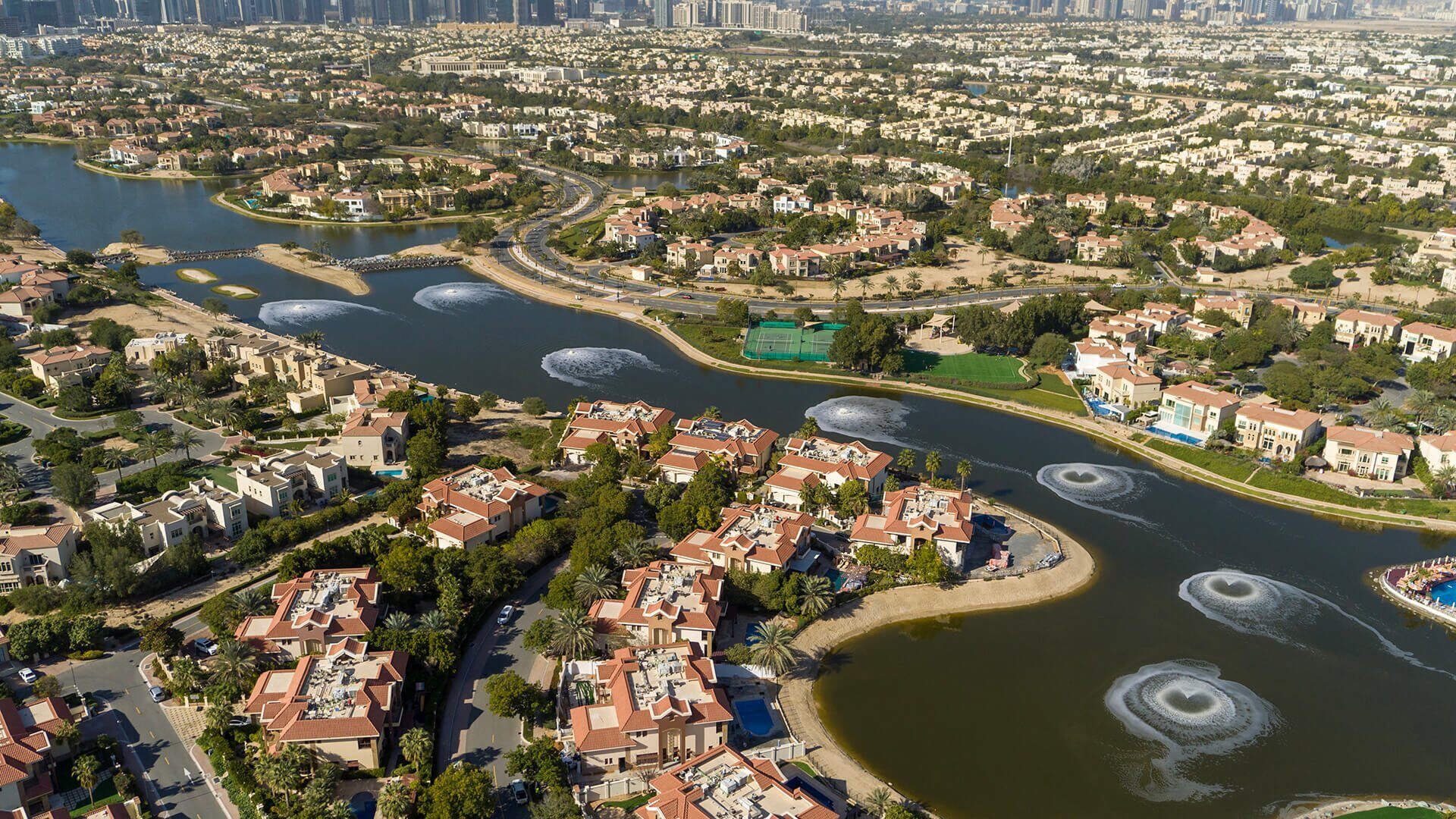
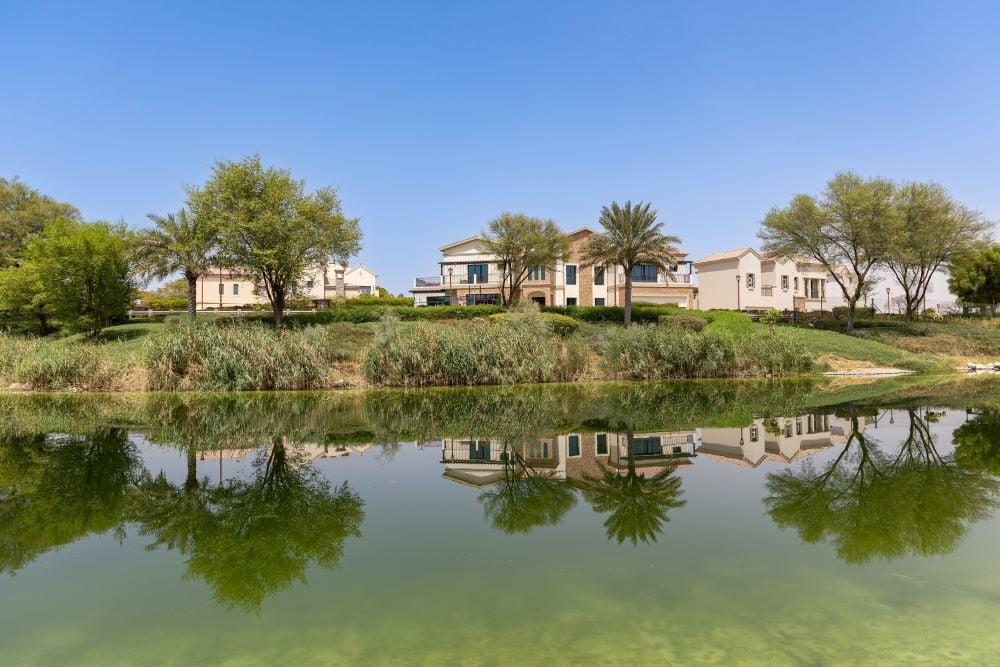
Spanning 1,119 hectares of immaculately landscaped terrain in Dubai's south-western corridor, JGE has long been recognised as one of the region's foremost luxury residential destinations. It is home to two Greg Norman-designed championship courses - Earth and Fire - the former of which has hosted the DP World Tour Championship for over a decade, attracting the global golfing elite and conferring on the community an enduring prestige. But what is reshaping the investment thesis for JGE today has less to do with birdies and more to do with the convergence of rail, metro, and motorway infrastructure on a scale that Dubai has never previously concentrated in a single district.
Three Networks, One Node
The transformation of JGE into a genuine transport interchange is the product of three overlapping infrastructure programmes, each significant in its own right, but collectively forming something far more powerful.
The first piece is already in place. JGE's Red Line Metro station, part of the Route 2020 extension, has been operational and connects the community directly into the broader Dubai Metro network, linking residents and visitors through to major commercial districts, Dubai Marina, and the city's wider arterial grid.
The second piece is the Etihad Rail passenger terminal, which sits adjacent to the Metro station and is nearing completion. Trains are already being tested on the line. When operational — expected this year — it will position JGE as one of the few addresses in the UAE with direct access to the national rail network, connecting the emirate's communities with Abu Dhabi and ultimately, under the broader GCC rail vision, the wider Arabian Peninsula.
The third and most transformative piece is the newly announced Gold Line. Unveiled in April 2026 by His Highness Sheikh Mohammed bin Rashid Al Maktoum, this AED 34 billion metro corridor will be fully underground, running 42 kilometres from Al Ghubaiba to Jumeirah Golf Estates, where it will terminate and interchange with both the Red Line and Etihad Rail. It is Dubai's largest transport project to date, designed to serve approximately 1.5 million residents across 15 strategic districts and connect with more than 55 major real estate developments currently under construction. When it opens on 9 September 2032, JGE will become the western anchor of an entirely new cross-city spine.
The Investment Logic
For discerning investors, the significance of this infrastructure convergence should not be understated. Transport-oriented development is one of the most reliable drivers of sustained property value appreciation in global real estate markets, from Canary Wharf in London to Hudson Yards in New York.
Dubai's own data supports this pattern. Property consultancies tracking the Gold Line announcement have already projected uplifts of up to 20 per cent in values surrounding new metro stations, while the broader project is forecast to deliver a 430 per cent cumulative economic return over 20 years. JGE, as the line's western terminus and its primary interchange with the national rail network, is uniquely positioned within that value curve.
The property market has already been moving. Price per square foot in JGE recorded year-on-year growth in 2025, sustained by constrained supply and resilient demand for golf-fronting villas and premium family residences. Premium villas and townhouses are delivering rental yields of between 5 and 8% — figures that measure up favourably against comparable luxury communities globally, with the added advantage of zero income and capital gains tax.
Wasl's landmark 'The Next Chapter' masterplan expansion, announced in May 2025, adds further weight to the investment case. Covering 4.68 million square metres and encompassing over 12,000 new residential units spanning hilltop mansions to branded residences, it is explicitly designed around the transport node now taking shape at JGE's eastern boundary. Direct access to the Etihad Rail terminal and the Metro station is built into the development's DNA. The addition of 48,000 square metres of retail and dining, an international academy, and comprehensive wellness infrastructure positions the expansion as a self-contained urban quarter, not merely a residential extension.
A Layered and Networked City
Transport experts have noted that what is emerging at JGE represents something qualitatively different from Dubai's previous infrastructure investments. Martin Tillman, a former transport director at Ras Al Khaimah Municipality and a recognised authority on UAE mobility, has described the development as a shift "from corridor-based metro to a mature, layered and networked transport system", which is reflective of the kind of systemic maturation that characterises cities such as Singapore and Hong Kong, where transport node premiums are embedded and durable.
The Gold Line's route is instructive in understanding why JGE's position at its terminus is so commercially significant. The line traverses Al Ghubaiba, Bur Dubai, Al Satwa, Business Bay, Meydan, Mohammed Bin Rashid Gardens, Jumeirah Village Circle, and Dubai Production City before reaching JGE, effectively threading together old Dubai and the city's most active development corridors into a single underground spine. Travel time from the historic Al Ghubaiba area to JGE, currently over an hour by road during peak hours, is projected to fall to under 30 minutes. For JGE residents and investors, this means the community is no longer peripheral to the city; it becomes a primary destination on its own terms.
Complementing the rail and metro infrastructure is JGE's existing road connectivity. The community sits adjacent to Sheikh Mohammed Bin Zayed Road (E311), one of the UAE's principal arterials, with access also from Al Khail Road (E44), Al Yalayis Street, and Al Jamayel Street; four major road corridors that ensure flexibility of movement irrespective of transport mode.
The Considered Position
It is worth tempering enthusiasm with the clarity that execution matters. The ultimate test for the JGE node will be whether it becomes a genuine urban centre with supplementary elements such as taxi access, shaded pedestrian connections, and seamless first-and-last-mile links to surrounding communities — or if it serves as merely a large interchange. That distinction will be determined over the coming years as the infrastructure matures.
What is already clear is that the strategic intent is unambiguous, the public investment is committed, and the private capital is following. For those positioned early in communities that sit at the confluence of multiple infrastructure programmes, the historical pattern, in Dubai and comparable global cities, is that the market catches up to infrastructure value, typically with a lag that rewards those who act on foresight rather than confirmation.
Jumeirah Golf Estates is no longer simply an address for golf enthusiasts seeking a prestigious retreat. It is becoming one of the most consequential transport junctions in the region. For investors, that distinction changes the calculus entirely.