Published: 13 July 2026
In 1924, Pietro Loro Piana founded the modern Loro Piana company in Quarona, a small town in Italy’s Piedmont region with a deep textile tradition. The family’s connection with wool had already been established long before then, but it was in the twentieth century that the name began its slow journey from cloth merchant to global luxury house. Its early reputation was not built on fashion in the obvious sense. It came from fibre, handle and finish: cashmere, vicuña, fine merino wool, linen and silk, worked with the patience of a mill and the confidence of a family business.
After the Second World War, Franco Loro Piana took the business beyond Italy, exporting fine fabrics to Europe, the Americas and Japan. The next generation, Sergio and Pier Luigi Loro Piana, brought a sharper focus to rare fibres in the 1970s before moving into ready-to-wear and accessories in the 1980s. LVMH, the French luxury group, acquired a majority stake in 2013, giving the house a wider platform while leaving its reputation rooted in Italian material knowledge.
For all its global reach, Loro Piana still carries the habits of a textile house. Its strongest pieces are usually judged by use: how a coat sits on the shoulder, how a cashmere throw feels in the hand, or how a fabric holds its shape over time. This is not luxury built around a visible logo or a dramatic cut, but around wear, touch and daily comfort.
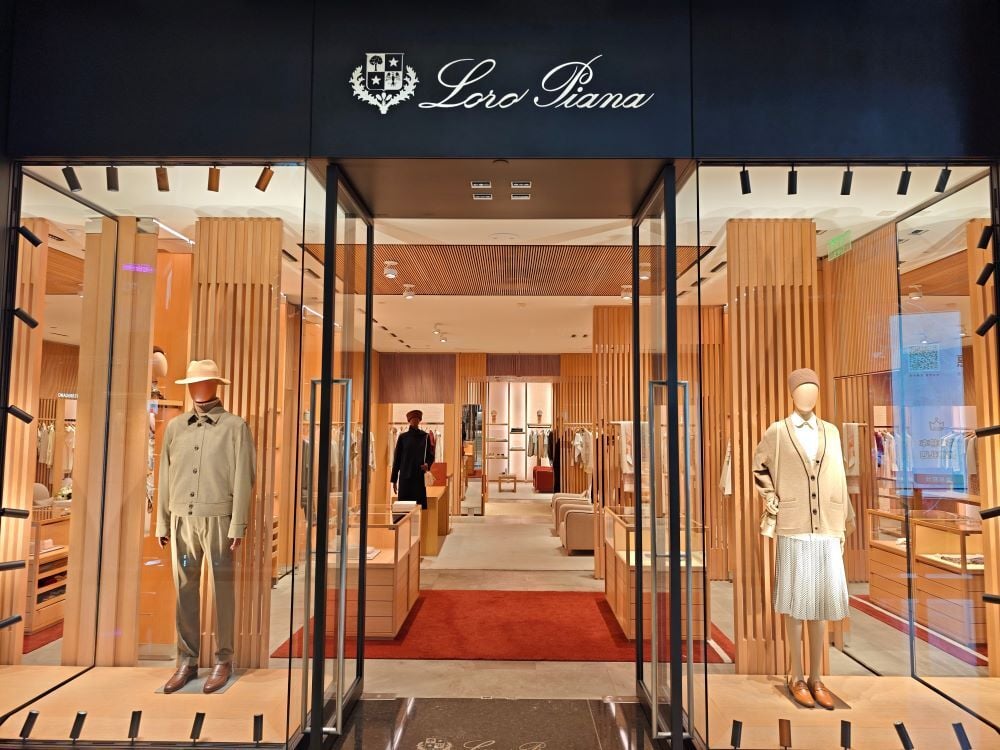
image source: Robert Way / Shutterstock.com
The Cloth Comes First
Loro Piana’s language has always been tactile. Vicuña, baby cashmere, merino wool, silk and linen sit at the centre of its world, but rarity alone would not have carried the house this far. The fibres have to work in real life, whether as a travel coat, a winter knit, a yacht cushion or a sofa fabric in a private residence.
That practical side is part of the brand’s charm. Storm System fabrics were developed to resist wind and rain while keeping a refined hand. Pecora Nera wool, sourced from naturally dark New Zealand merino sheep, brings colour from the fibre itself rather than from artificial dye. More recent work around traceability has added another layer to the story, as luxury clients increasingly ask not only what something is made from, but where it came from and how it was handled along the way.
This helps explain why Loro Piana moves so easily between wardrobe and home. The same material instinct that makes a cashmere coat appealing can also make a room feel properly finished. In the best interiors, elegance is not separated from use; rather, it sits quietly in the quality of the cloth, the proper weight of a curtain, the finish of a well-made chair and, just as importantly, the restrained way natural materials are brought together.
A Collector’s Room
In 2017, Loro Piana Interiors found a fitting address inside Sotheby’s New York headquarters with The Library by Loro Piana, a private lounge for clients and collectors. It was designed for the quieter parts of collecting, including time spent with works of art, catalogues, advisers and small cultural gatherings. The room carried the house’s touch in a measured way, with cashmere underfoot, grey chalk-stripe wool on the sofas and neutral rugs giving the space its calm footing.
The Library by Loro Piana hosted talks, book events, previews and collector gatherings, giving Loro Piana’s interiors language a working role inside the auction house. Luxury-week auctions have included cashmere blankets and accessories, though selectively, while Sotheby’s marketplace has listed Loro Piana handbags.
Into Dubai
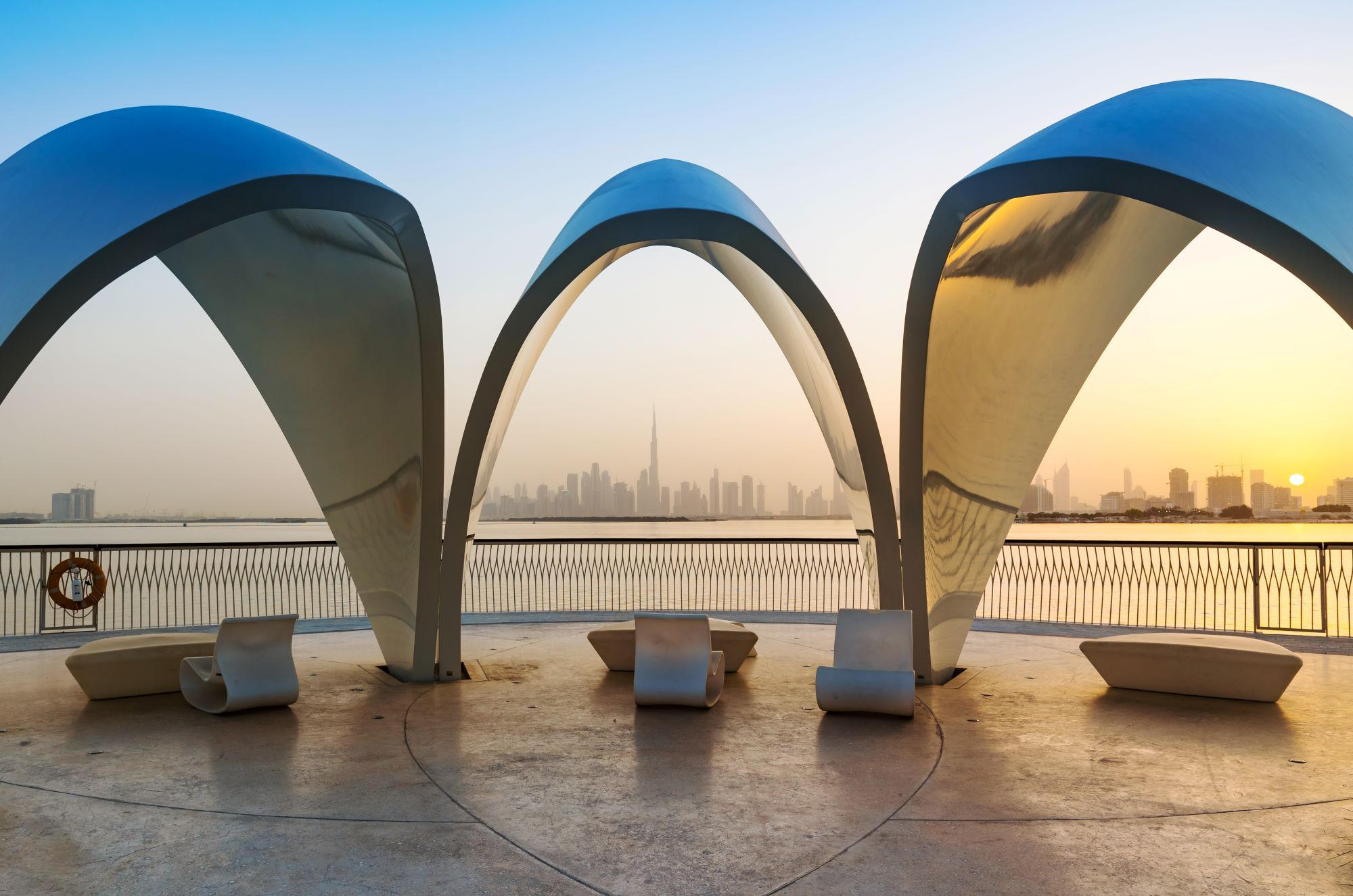
Dubai gives Loro Piana a particularly fitting stage, not simply because it is a luxury retail city, but because private collecting, art advisory, super-prime property and discreet client service sit unusually close together. A client might move between DIFC, a villa appointment in Emirates Hills or Dubai Hills Estate, and a private retail appointment at Dubai Mall within the same day. The expectations are exacting, and the city is well used to serving them.
The Dubai Mall flagship first opened in 2017 and reopened in 2023 after a major renovation, almost doubling in size to around 6,700 sq ft across two floors. The redesigned boutique was also the first in the world to present Loro Piana’s new store concept. Its upper floor is dedicated to VIP clients, with private salons and a separate entrance, giving the space a more residential, appointment-led character. The façade, reimagined by Jun Aoki and Yoshihiko Takeuchi, uses handmade Italian terracotta ceramic tiles, while the interiors bring together oak, Carabottino detailing, Kummel-toned marble, wool and silk carpets, cashmere-upholstered seating and other natural materials.
The brand’s wider Dubai presence is focused and selective. Alongside the Fashion Avenue flagship, Loro Piana also has a boutique at Mall of the Emirates and a dedicated corner within Harvey Nichols, giving clients access across two of the city’s strongest luxury retail addresses.
The UAE Touch
Loro Piana’s UAE presence has not been built through boutiques alone. In Dubai, the house worked with French-Tunisian artist eL Seed on a public installation near Dubai Opera linked to The Gift of Kings®, wrapping the pavilion in his Arabic calligraphy. For the UAE’s 50th anniversary, it also partnered with Emirati artist Mattar Bin Lahej, whose self-created Mattar Font reimagined words from the National Anthem as a pattern for 50 signed and numbered cashmere plaids. The collaboration later carried into a Ramadan capsule, giving the brand’s regional story a cultural layer rooted in Arabic typography, national memory and private collecting.
There is commercial intelligence here too. Regional pieces, including men’s Arabic sandals and Ramadan capsules, show that Loro Piana understands the Gulf as a market with its own habits, climate and social rhythm. Abu Dhabi adds a quieter, but increasingly relevant, note. At The Galleria on Al Maryah Island, Loro Piana sits within one of the capital’s most polished luxury retail addresses, close to the city’s financial district, waterfront residences and private client circles.
From Wardrobe To Room
Loro Piana’s interiors story predates the formal creation of Loro Piana Interiors in 2006. The house had long understood cloth beyond clothing, with fabrics used for upholstery, curtains and decorative purposes before the interiors division gave that work a clearer identity. From there, the offer expanded into homes, yachts, private aircraft and hospitality, and later into furniture and complete domestic settings.
The Palm Duet chaise longue, created with Raphael Navot and launched in 2021, marked an important step in that direction. Its curved form, followed by the wider Palm family of sofas, armchairs, stools and tables, showed Loro Piana fabrics not simply as coverings, but as materials capable of shaping comfort, scale and atmosphere.
That thinking continues in the 2026 Fabrics Collection, presented at Paris Déco Off. Wish® wool of 15-micron finesse is blended with cashmere; linen appears in pure and mixed forms; alpaca and recycled Trevira® add softness, structure and resilience. The palette remains close to nature, with earthy neutrals, greens, muted blues, burnt orange and Kummel, while a delicate paisley motif creates a quiet link between the house’s clothing and interiors collections.
Loro Piana’s relevance now extends beyond the wardrobe. It belongs just as convincingly to the private interior, from cashmere throws and well-upholstered chairs to chic salons where luxury is carried by the lush material quality.