Published: 01 April 2026
When making travel plans, safety is an essential consideration alongside climate, cost, and culture. No matter how picturesque or lively a destination may seem from the outside, what any visitor really wants is an experience that provides complete peace of mind for the duration of their stay. The countries below consistently earn the highest marks across the indices that are commonly viewed as global benchmarks for security: the Global Peace Index, Numbeo's Safety Index, and the Berkshire Hathaway Travel Protection annual survey. Together, they present a compelling shortlist for those who wish to explore the world with confidence.
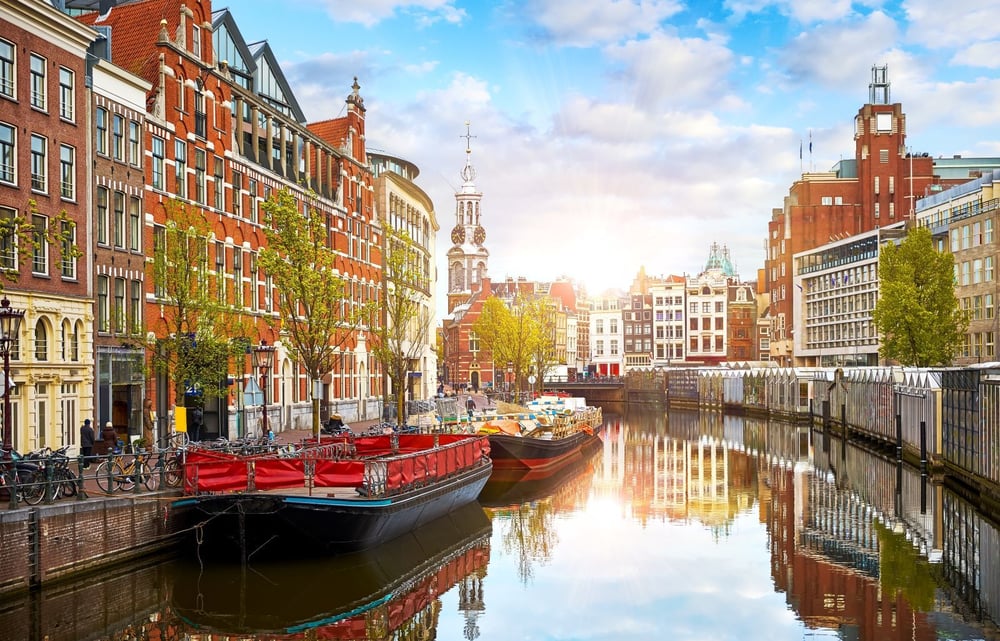
The Netherlands
The Netherlands claimed the top position in the most recent Berkshire Hathaway traveller safety rankings, drawing praise for its consistently high scores on both the Global Peace Index and Numbeo. The Hague and Eindhoven each feature among the world's top twelve safest cities. Travellers commend the country's health infrastructure, the ease of navigating its cities, and the exceptionally low rates of violent crime. Amsterdam, Rotterdam, and Utrecht offer rich cultural experiences underpinned by a legal and civic framework that prioritises personal safety. The primary caution for visitors is prosaic: the Netherlands has dedicated cycling lanes, and pedestrians would do well to look both ways before crossing them.
The United Arab Emirates
The UAE's credentials as a visitor destination are, by the numbers, exceptional. In Numbeo's 2025 Mid-Year Safety Index, the UAE claimed the number one position globally, achieving a Safety Index score of 85.2 across 168 countries. Its Crime Index of 14.8 is the lowest recorded globally, placing it below every other nation measured. Five UAE cities rank among the top six safest cities in the world: Abu Dhabi leads with a score of 88.8, followed by Ajman, Dubai, Ras Al Khaimah, and Sharjah.
For tourists specifically, the picture is equally clear. Public transport is monitored and secure; taxis and ride-sharing services are regulated; and emergency services operate to international standards. Ninety-five percent of UAE residents report feeling safe walking alone at night, which easily eclipses the figures of most Nordic nations.
During the onset of Covid-19, the country’s readiness to tackle large-scale emergencies really came to the fore. While rolling periods of lockdown affected much of the world, the UAE was able to reopen for business within a few short months.
This agile approach to crisis management allowed the UAE to function smoothly in comparison to global counterparts and to create a secure environment for visitors from every corner of the globe.
Iceland
Iceland has led the Global Peace Index for over fifteen consecutive years, boasting a record no other country has approached. It is a society with negligible violent crime, an unarmed police force, and near-total absence of political instability. For tourists, the combination of dramatic natural scenery and genuine personal safety is unmatched. Reykjavík is compact, walkable, and consistently rated the safest capital city in the world. The only meaningful caveat is geological: Iceland's active volcanoes periodically affect access to its famous ring road, and travellers are advised to monitor alerts from the Icelandic Meteorological Office before and during their visit.
Switzerland
Switzerland occupies a permanent position near the top of every global safety index, and for good reason. Its homicide rate is among the lowest of any developed economy, its judicial system is among the most trusted globally, and it has a reputation for political neutrality that has remained intact for centuries. Zurich, Geneva, and Basel each rank in Numbeo's top thirty safest cities worldwide. The country's transport infrastructure is regarded as the finest in Europe, making independent travel both straightforward and secure. For visitors seeking safety alongside alpine scenery, cultural institutions, and culinary excellence, Switzerland sets the benchmark.
Japan
Japan presents a compelling case as the safest destination on earth among larger nations. Despite a population of 125 million spread across dense urban centres, its crime rates are structurally low: lost wallets are routinely handed in to police stations, and tourists consistently report the freedom to move independently at any hour without concern. Tokyo, Osaka, and Kyoto rank among the world's most visited cities, and all feature prominently in global safety indices. Japan's approach to public order is deeply ingrained in its culture. Civic responsibility is treated as a mark of character and personal pride, which builds a more internally secure society than would be possible using legislation and surveillance efforts.
Singapore
Singapore's rise to the top tier of global safety rankings reflects the outcomes of sustained, deliberate governance. Its crime index of 16.4 per 100,000 people is among the lowest recorded by any major city-state. Public spaces are well-lit, monitored, and orderly; the MRT transport system runs to a standard that most European cities would aspire to; and 97% of residents and visitors report feeling safe. Travellers should be aware that Singapore's legal code is rigorously enforced, including provisions that may differ from those in Western countries, such as prohibitions on chewing gum and strict penalties for drug-related offences. Respect for local law is both advised and, in practice, the norm. However, it is this insistence on following the smallest letters of the law that has helped to develop a thriving, safe destination for all travellers.
Ireland
Ireland's second-place position on the Global Peace Index reflects a country where political stability, cultural warmth, and personal security combine in a particularly accessible form. Violent crime remains significantly below European averages. Dublin, Cork, and Galway each offer lively and welcoming environments for visitors, with a night-time economy that is broadly safe and well-policed. Public trust in institutions is high, and tourist infrastructure is well developed. As a gateway into Europe and one of the few English-speaking nations in the global top ten, Ireland holds particular appeal for those travelling without prior European experience.
New Zealand
New Zealand combines low crime, geographic isolation, and a well-funded emergency response network to create one of the world's most reliably safe visitor destinations. The country's police force is unarmed, a rarity that reflects the ambient security of everyday life. Its natural landscapes, which range from fiords to alpine passes to volcanic plateaux, are well-monitored, with robust infrastructure supporting independent exploration. Travellers should note seasonal differences from the Northern Hemisphere, and exercise standard precautions in tourist-heavy areas where petty theft occasionally occurs.
Portugal
Portugal has climbed steadily through global safety rankings over the past decade and now holds a firm position in the world's top ten. Lisbon and Porto are considered among the safest capitals for solo travellers in Europe, including solo female travellers. Political stability has been consistent, and investment in tourism infrastructure has been substantial. Violent crime is rare; the main concern for visitors is opportunistic pickpocketing in busy areas, a risk common to virtually every popular destination in Southern Europe. For those seeking a safe entry point into continental Europe with warm weather, affordable costs, and a welcoming population, Portugal offers an outstanding combination.