Published: 5 November 2026
Jean-Marc Vacheron was 24 when he took on his first apprentice. The contract, drawn up in Geneva on 17 September 1755, is still kept in the maison’s archives, and it is from that modest agreement that Vacheron Constantin dates its foundation. Geneva’s master watchmakers of the period, the cabinotiers, worked in workshops on the upper floors of the city’s houses, where the light was best, and it was in that world that the young Vacheron set up on his own account. The house he founded describes itself as the oldest watch manufacturer in continuous operation since its foundation, a run that reached 270 years in 2025.
Two centuries on, a Vacheron Constantin was the gift Geneva chose for the statesmen who came to the city for the summit of July 1955. One of them, a reference 6032 in 18-carat yellow gold, 34mm across, carries on its case a tribute from the citizens of Geneva to Sir Anthony Eden, then Britain’s Prime Minister. It was one of eight examples of the model presented to political figures attending the summit, and the watch given to Harold Macmillan has also appeared in a Sotheby’s catalogue. Eden’s timepiece came to Sotheby’s Watches sale in London on 16 April 2019 as lot 41, estimated at £5,000–7,000, with an Extract from the Archives confirming that it had been made in 1954.
Geneva Beginnings
The founder’s own work survives in a silver pocket watch signed “J. M: Vacheron A Geneve”, the only known timepiece to carry his first name. Its verge escapement was standard for the day, while the gold hands and engraved balance cock show the decorative skill expected in Geneva. The workshop passed down through the family, and in 1819 the founder’s grandson, Jacques Barthélémi Vacheron, went into partnership with François Constantin, whose travels took the firm’s watches into new markets. Writing from Turin on 5 July 1819, Constantin set down the line the maison still uses as its motto: “Do better if possible, and that is always possible.”
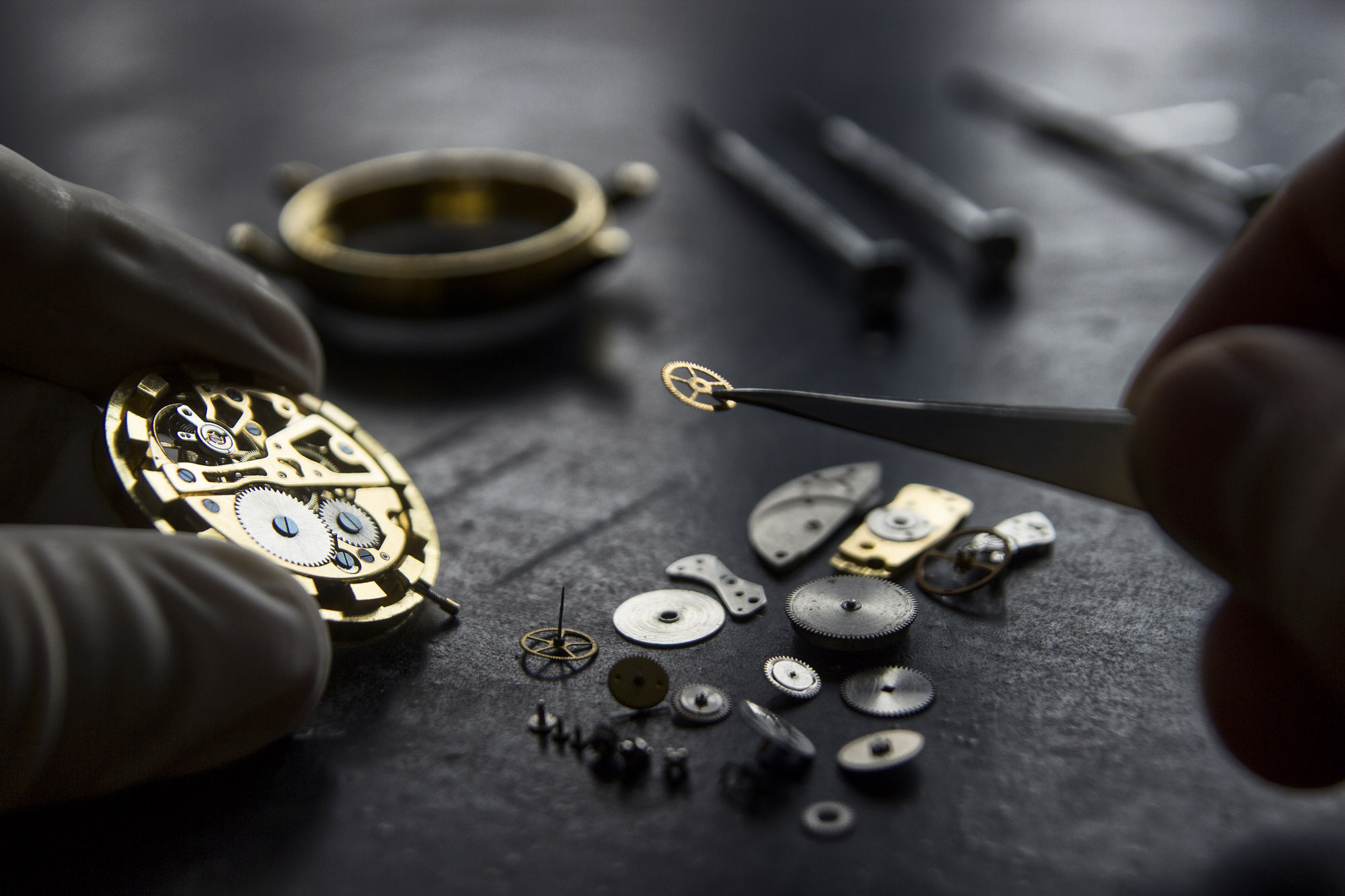
Method mattered as much as ambition. In 1839 Georges-Auguste Leschot adapted the pantograph to watchmaking, so that components could be produced to consistent dimensions, and in 1844 he received the Prix de la Rive for his contribution to Geneva’s industry. The Maltese cross, adopted as the company’s emblem in 1880, has a workshop origin too, taken from a small part in the barrel that helps the mainspring deliver its force evenly.
Thin Movements and Great Complications
Thinness has been a recurring discipline. For the bicentenary in 1955, Vacheron Constantin produced Calibre 1003, a hand-wound movement of 117 components just 1.64mm thick, which the maison compares to a Swiss 20-centime coin. Sixty years later, in 2015, the calibre was revisited and made again in gold. The slender cases and quiet dials of today’s Patrimony collection, drawn from the watches of the 1950s, belong to the same line of thought.
Complication has run alongside it. To mark the 260th anniversary, on 17 September 2015, the maison revealed reference 57260, a pocket watch combining 57 complications that had taken eight years to develop. Ten years later came Les Cabinotiers Solaria Ultra Grand Complication – La Première, a unique wristwatch of 1,521 components and 41 complications, among them a Westminster minute repeater striking on four gongs. Vacheron Constantin presents it as the most complicated wristwatch ever made, and its development, again, took eight years.
Shapes of the Twentieth Century
Some of the maison’s best-known designs began as answers to practical questions. The American 1921 was designed for drivers, its cushion-shaped case carrying a dial set at an angle so that the time could be read without turning the wrist from the steering wheel. The design has returned more than once in the Historiques collection, and at Watches and Wonders 2026 Vacheron Constantin introduced two new versions in rose gold, at 36.5mm and 40mm.
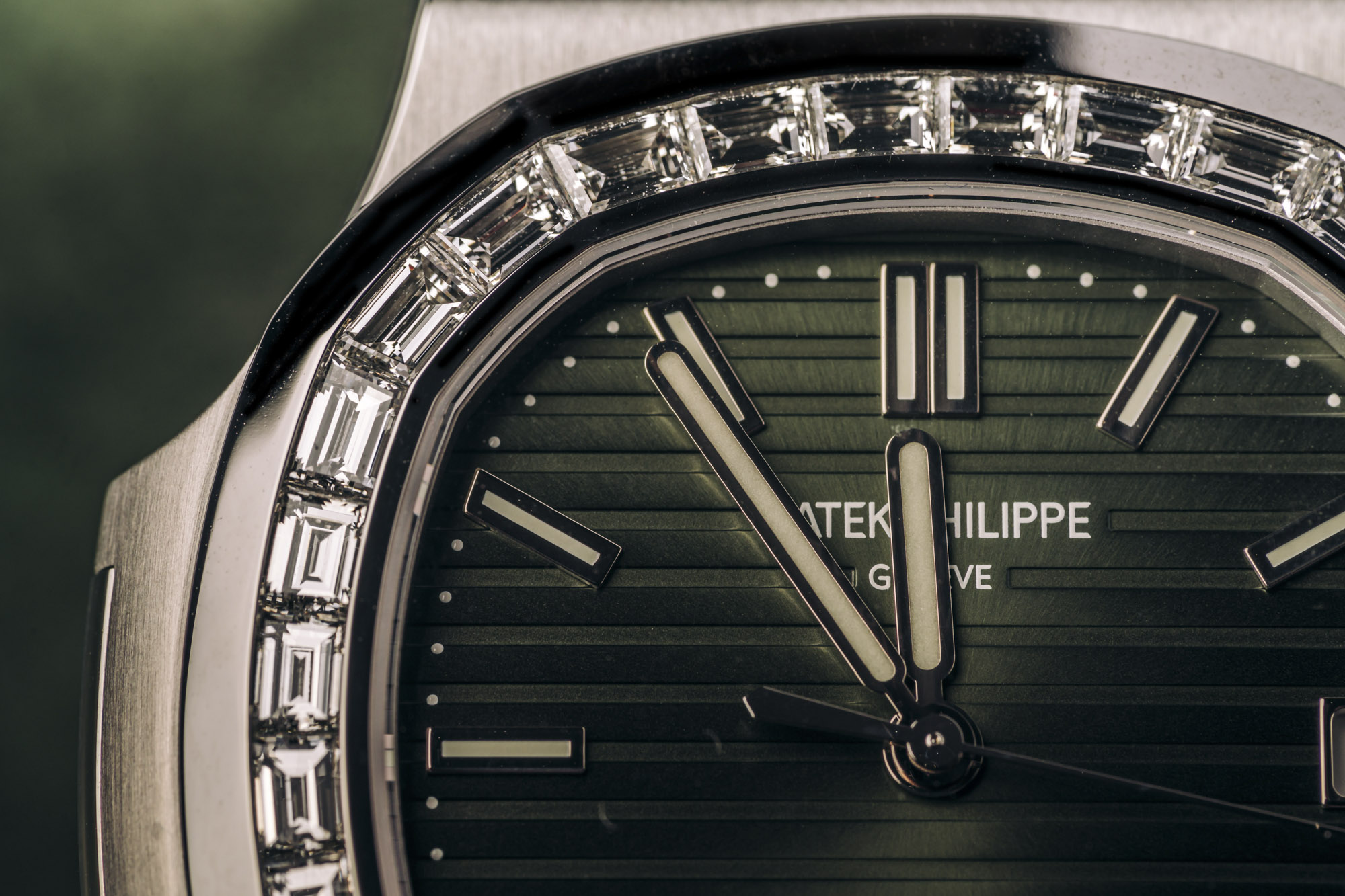
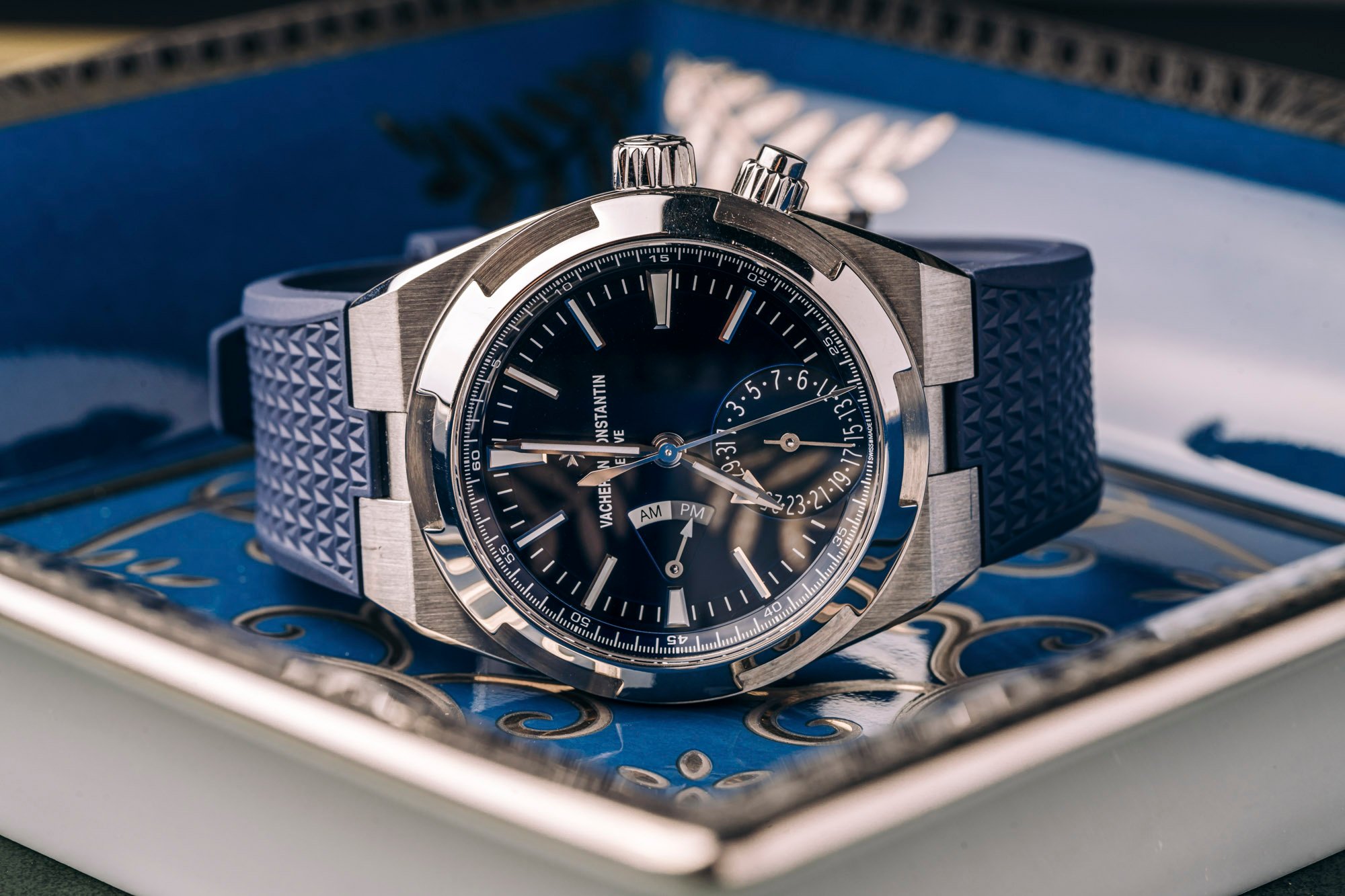
The 222, launched in 1977 to mark the company’s 222nd anniversary, answered a different need. Designed by Jörg Hysek, it had a monobloc case, a notched bezel and an integrated bracelet, and it gave the maison a sports watch of its own. Inside was Calibre 1121, the date-equipped version of the ultra-thin automatic Calibre 1120 that had entered production in 1967. A yellow-gold reissue appeared in 2022, followed in 2025 by a version in steel that opened the 270th-anniversary celebrations, and the Overseas collection, introduced in 1996, has taken the sporting idea further still.
The Sotheby’s Record
Sotheby’s sales have traced much of this history. In October 2018, working with Vacheron Constantin’s own Heritage Department, Sotheby’s held Vacheron Constantin: The Vintage Collection, an online sale of six watches from the maison’s heritage collection, each restored by its own watchmakers, spanning some six decades. One was a reference 4240 complete calendar of 1945 with teardrop lugs, unusual for being cased in steel at a time when wartime steel was rationed, estimated at £8,000–12,000. Another was a reference 6440 of 1960, the yellow-gold automatic known to collectors as the Cioccolatone, its layered case measuring 43mm by 35mm, with an estimate of £15,000–25,000.
A rarer piece was offered at Sotheby’s Important Watches sale in Geneva on 10 May 2026. Consigned by the family of its original owner, it was a 34mm, square-cased 222 of around 1978 in steel and yellow gold, one of only a few hundred believed to have been made. Its grey dial bore the coat of arms of the Kingdom of Saudi Arabia, and its presentation box, decorated with the same emblem, carried the name of Haji Abdullah Alireza & Co. Ltd. Sotheby’s noted that only about a dozen such watches with national emblems are publicly known, and placed an estimate of CHF 20,000–40,000 on it.x
Vacheron Constantin and Dubai
Dubai has had its own chapter in that record. From 28 to 30 October 2024, Sotheby’s Treasures of Time exhibition came to DIFC ahead of its Geneva auction on 10 November, and among the watches on view were two reference 3307 chronographs made in 1927 for King Alexander I of Yugoslavia, offered as lots 7 and 8. The first was estimated at CHF 70,000–100,000, and Dubai Sotheby’s International Realty’s Journal followed the visit when Sotheby’s Treasures of Time arrived in Dubai.
The connection goes back further. Sotheby’s held its first watches auction in Dubai on 19 November 2018, with Vacheron Constantin watches in the catalogue, and the sale raised US$2.6 million. The evening before, around 150 guests gathered at Sotheby’s Dubai office, in partnership with Sotheby’s International Realty, to view the watches alongside other works of art.
The maison’s own presence in the city has deepened in step. In 2022 it reopened its renovated flagship in The Dubai Mall, now with a permanent space for vintage Les Collectionneurs watches and a heritage exhibition, and marked the occasion with specially commissioned work by the Emirati designer Aljoud Lootah, whose pieces combined traditional embroidery with falcon feathers. In February 2025 its redesigned boutique in Mall of the Emirates reopened with “Home”, an artwork developed from photographs by Her Highness Sheikha Lateefa bint Maktoum bin Rashid Al Maktoum and realised with the Tasmeem Tashkeel Art & Design Collective, showing a desert scene of falcons, Arabian gazelles and ghaf trees.
Collecting With Care
A long history means a wide field, from eighteenth-century pocket watches to modern grand complications, and judgement matters more than reputation. Originality comes first, since a replaced dial or a refinished case alters the character of a vintage watch even when the work was done with the best intentions, and estimates should be read as estimates rather than as prices achieved.
The maison’s Heritage Department can help. An Extract from the Archives records what the archives hold about a watch, while a Certificate of Authenticity, which describes the watch and gives its year of manufacture, is issued only after the piece has been examined by the department’s experts. For an opinion on market value, Vacheron Constantin itself refers owners to a specialist auction house.
The Eden watch shows why that paperwork matters. The engraving names the occasion, the archive supplies the year it was made, and its seven sister watches tie it to a single summer in Geneva more than seventy years ago.